REVIEW · GUIMARAES
Guimarães: Flexible Walking Tour in Historic Center
Book on GetYourGuide →Operated by Travelbox, Lda. · Bookable on GetYourGuide
Guimarães has a way of pulling you in fast. This self-guided Walkbox walk helps you see the UNESCO medieval center at your speed, with audio that plays automatically as you move. I like that it’s practical and flexible, not a rigid group slog, and you can follow along in English, Portuguese, French, and Spanish.
Two big wins for me are the offline audio (no data panic) and the smooth route from the castle down through the old streets and back over the walls. One thing to consider: it’s not a live guided tour, so you need a charged smartphone and you should be comfortable reading your map and following directions on foot.
In This Review
- Key things I’d bet you’ll love
- Guimarães’ UNESCO Medieval Center: Why This Walk Works
- The Walkbox App: Offline Audio, Auto-Play, and Real Flexibility
- Starting at Campo de São Mamede: The Castle Sets the Tone
- Santa Maria Street to Santiago Square: From Stronghold to Old Town
- Old Town Hall Arcades and Oliveira Square: The Church-Focused Heart
- Toural Square and the Streets of Dom João II, Bento Cardoso, and Camões
- Leather Tanks and São Francisco: The Section That Adds Texture
- Alameda and Campo da Feira: A Calm Finish Before the Walls
- Back Along the Walls: The Pedestrian Footpath Return
- Price and Practical Value: $8 for a 3–4 Hour Independent Experience
- Who Should Book This Walkbox Walk—and Who Might Skip It
- Should You Book the Guimarães Flexible Walking Tour?
- FAQ
- Where does the tour start and end?
- How long is the walking route?
- How far is the route?
- Does the Walkbox tour work offline?
- Is there a live guide with you?
- Is it suitable for people with mobility impairments?
Key things I’d bet you’ll love
- Offline Walkbox audio that plays automatically as you walk, in four languages
- Do it in pieces: start when you want and finish within 5 days of booking
- A built-in walking loop: about 3.5 km, usually 3–4 hours, with an easy flow
- Iconic medieval hits: Guimarães Castle, the Dukes’ Palace, and multiple major churches
- Street-level detail: arcades, town squares, and even the medieval leather tanks
- Big views on return: the footpath on the Walls of Guimarães ties it together
Guimarães’ UNESCO Medieval Center: Why This Walk Works
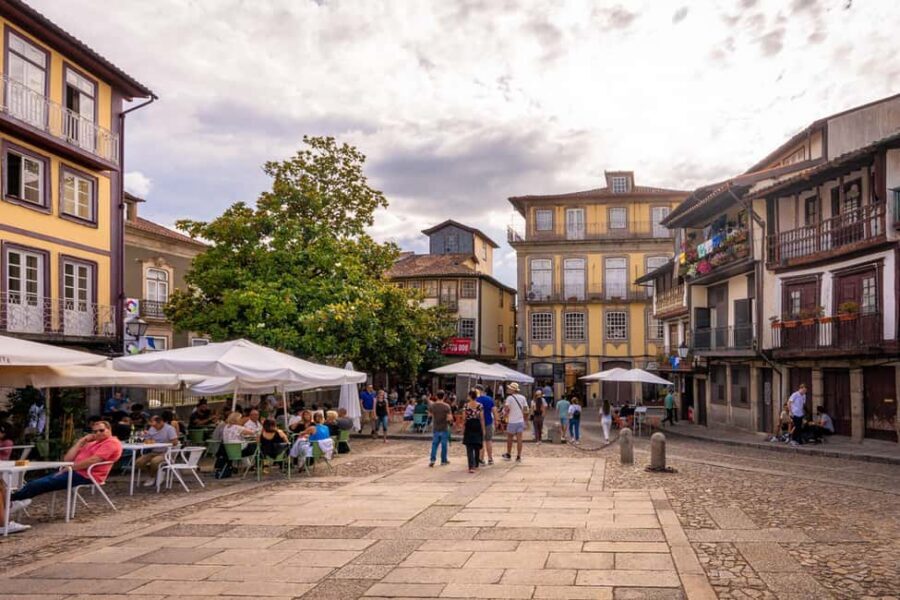
Guimarães is one of those Portuguese places where the streets feel like they were built to be walked. The medieval center is UNESCO-listed, and the best way to get the feel is not to rush from one postcard to the next. This 3 to 4 hour loop is designed for exactly that: you move through the historic spine of the town, then you loop back with a view from the walls.
What makes this experience especially useful is that it’s not only about seeing landmarks. It’s also about understanding how the town is organized—castle first, then ceremonial and religious spaces, then market life around town squares, and finally the quiet rhythm of gardens and the wall walk back.
Because you do it on your own schedule, you’re free to linger when something catches your eye—an entry arch, a church façade, or a stretch of stone steps—without worrying about keeping up with a group. That freedom is one of the reasons this kind of app-based tour can feel more like exploring with a good friend than following a script.
You can also read our reviews of more tours and experiences in Guimaraes.


The Walkbox App: Offline Audio, Auto-Play, and Real Flexibility
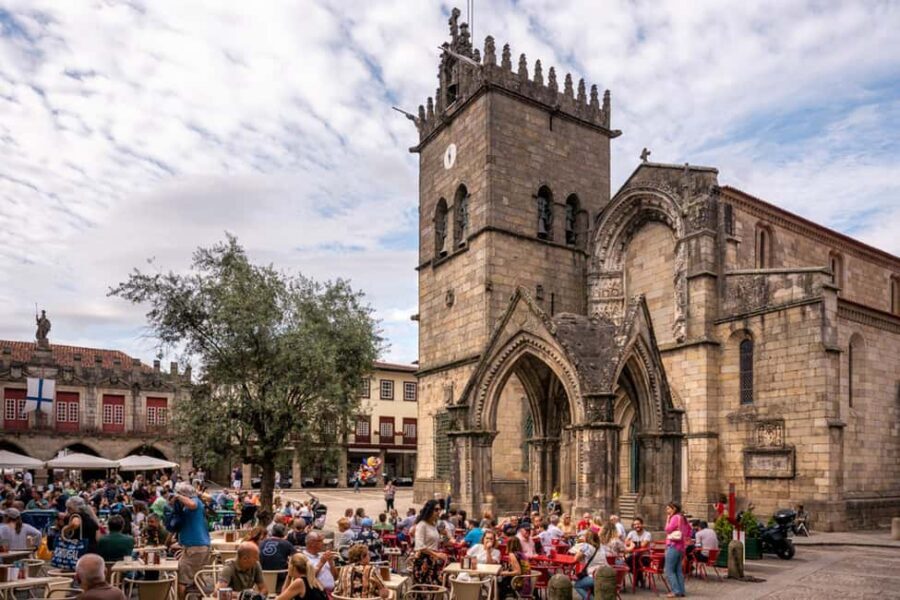
This is a Walkbox tour, and the format matters. You get an audio companion that you can use offline, so you’re not stuck hunting for signal while you’re in the old streets. The content is available in English, Portuguese, French, and Spanish, which is handy if you’re traveling with someone who prefers a different language.
A very practical feature is that the audio plays as you explore. You don’t need to constantly tap through screens to know what comes next. It helps you keep moving and keeps the experience natural, instead of feeling like you’re studying a phone.
You can also do the tour in full or in parts within 5 days of your booking date. That means if you arrive late, or you only have time for half the loop, you’re not stuck. You can come back and finish later.
Important note for your planning: there’s remote support available by WhatsApp or SMS between 8:00 AM and 8:00 PM, plus emergency assistance by phone. You’re still self-guided, but you’re not entirely on your own.
Starting at Campo de São Mamede: The Castle Sets the Tone

Your walk begins and ends at the Campo de São Mamede car park, right behind the Castle of Guimarães. Starting here is smart because the castle area gives you the big-picture view first. You see why the town developed where it did, and you’re not guessing.
From the starting zone, you begin with the castle of Guimarães, then move to the Church of São Miguel do Castelo and the Duques de Bragança Palace. Even if you’re not a hardcore history person, this is where you’ll feel the gravity of the place. The castle grounds and palace area set the tone for the rest of the walk—more ceremonial, more medieval, and more intentional than the everyday streets that come later.
Practical tip: wear comfortable shoes right from the start. This route is easy to follow, but the old center includes uneven surfaces and some stairs and slopes. A comfortable shoe makes the whole experience smoother, especially when you return on the walls later.
Santa Maria Street to Santiago Square: From Stronghold to Old Town
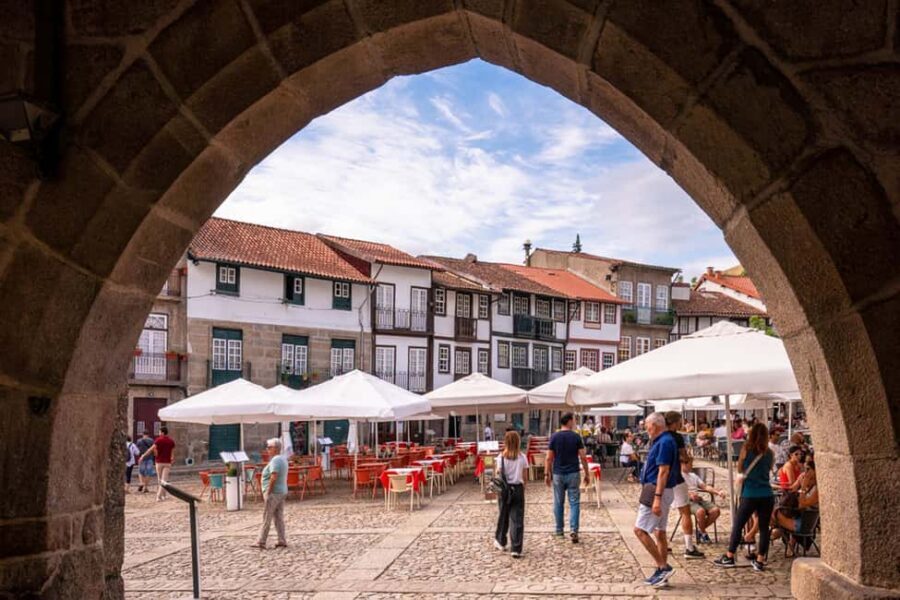
After the castle, the walk shifts from power and stone defenses into the human-scale streets of the medieval center. You follow the medieval Santa Maria Street to Santiago Square. This is the part of the walk where you start to feel the town’s layout. Streets connect major points like a map made of real buildings, not just lines on a page.
Santiago Square is a good pause. It helps you recalibrate after the castle section. You can take a breath, check your phone for what comes next, and then continue into the civic and religious spaces that define the historic center.
The real value here is how the walk builds momentum. It’s not random wandering. Each segment connects to the next, so when you reach later spots like Oliveira Square and Toural Square, they make more sense than if you arrived there on your own.
Old Town Hall Arcades and Oliveira Square: The Church-Focused Heart
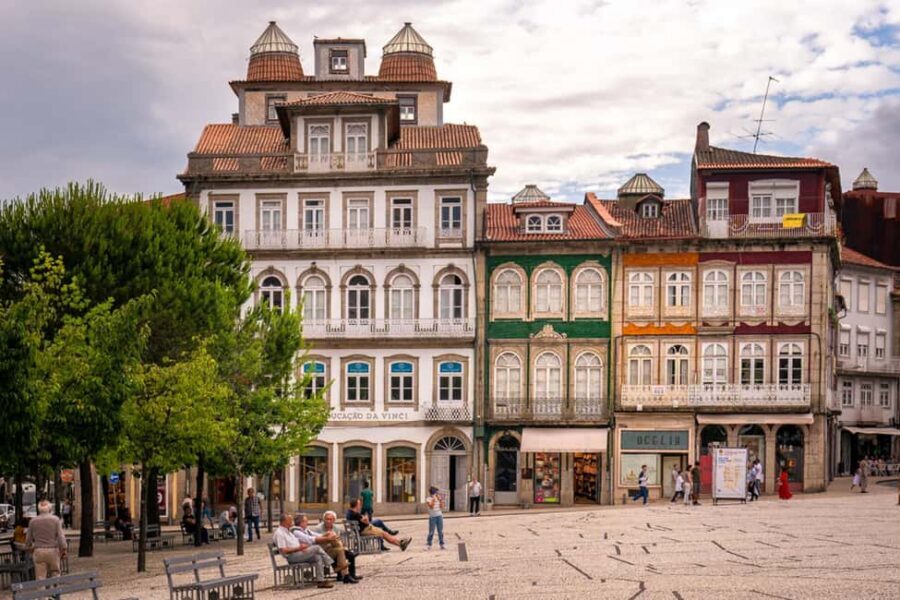
Next you pass through the Old Town Hall arcades and head to Oliveira Square, home to the Collegiate Church of Our Lady of Oliveira and the Salado Monument.
This is one of the key areas of the route because it’s where the town’s religious and civic life overlap. Arcades are more than pretty stone—they guide you through the town center in a way that feels sheltered and lived-in. Oliveira Square then feels like a payoff: the church stands as a focal point, and the monument adds another layer to what the town cared about historically.
If you like architecture details, this stop is worth slowing down for. Look at the church exterior and take your time with the square. The whole point of the loop is that you’re not being herded. You can spend 10 minutes here or 25, depending on your pace.
You can also read our reviews of more historical tours in Guimaraes

Toural Square and the Streets of Dom João II, Bento Cardoso, and Camões
From Oliveira Square you continue west to Toural Square, which used to be a 17th-century marketplace and now functions as a lively city hub. That “old market energy” is exactly what makes this part of the walk feel real.
Then the route guides you through several street corridors: Dom João II, Doutor Bento Cardoso, and Camões. These streets aren’t just passages between major sites. They’re where you’ll see small churches and convent spaces threaded into everyday life. In practical terms, this segment helps you experience Guimarães beyond the loudest landmarks.
What I like about this approach is that it rewards attention. If you keep your eyes up, you’ll notice façades, entrances, and church fronts that you might otherwise miss if you were only sprinting between big sights. You’ll also get a sense of where people actually move through the city.
Leather Tanks and São Francisco: The Section That Adds Texture
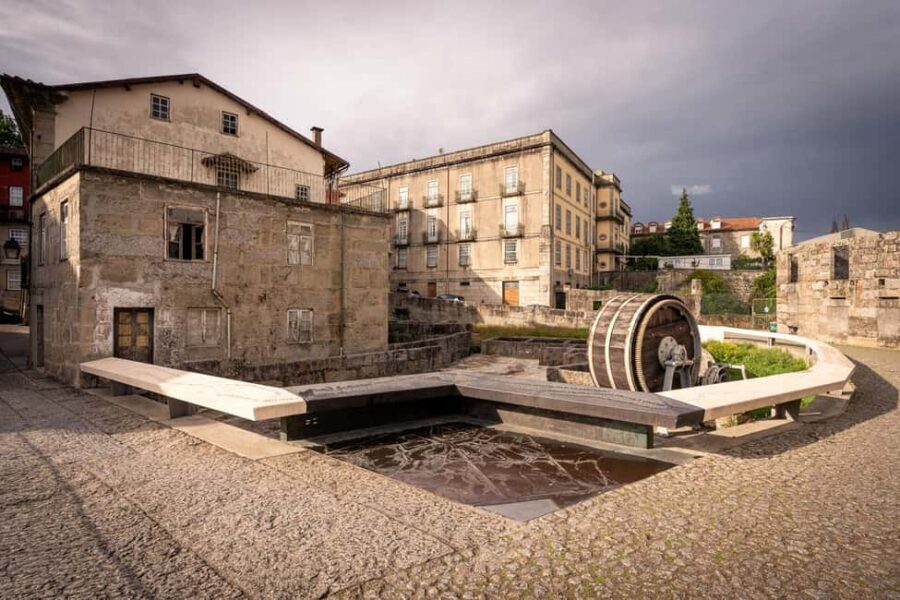
South of the main squares, the walk turns into something more specific: it takes you to the medieval leather tanks and the São Francisco complex.
This is a great reminder that Guimarães was not only about castles and churches. It was also about work—craft, production, and the daily economy that supported the city. Seeing the leather tank area within the route gives you context for the medieval town as a functioning place.
Then there’s São Francisco. You’ll approach it as part of the same walking logic—arrive from streets, transition from daily life into a major religious complex, and then keep moving with the app guiding you through what to notice.
This section can be a good mental reset too. It breaks up the church-and-square pattern just enough to keep the walk from feeling repetitive.
Alameda and Campo da Feira: A Calm Finish Before the Walls
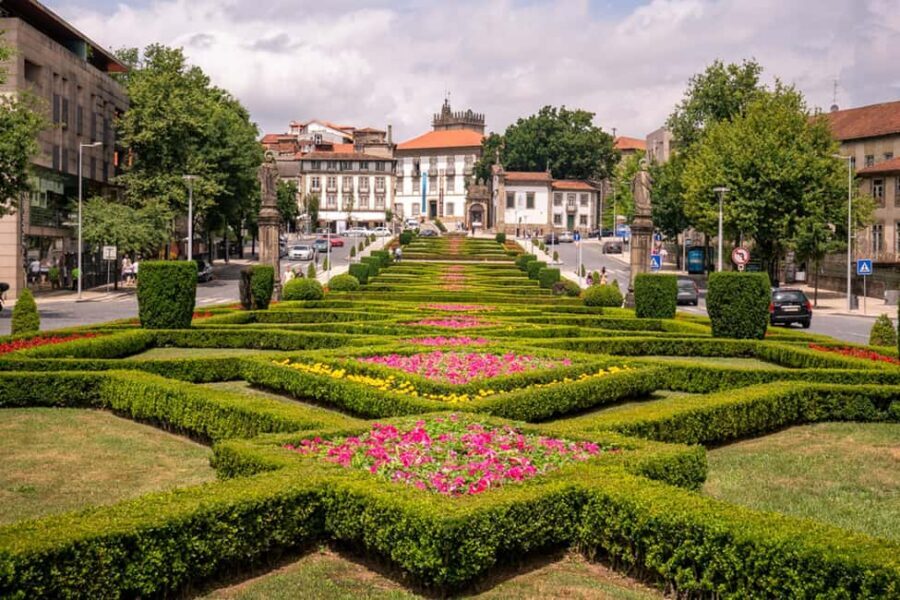
Toward the end, you shift into gardens. The route goes through the Alameda Public Garden to Campo da Feira Garden, where you’ll find the Church of Our Lady of Consolation and the Holy Steps.
This part matters because gardens give you a walking-down-from-the-intensity moment. After the medieval streets and major buildings, you get some space to breathe and regroup. It’s also a psychological trick: once you’re in quieter surroundings, the final return loop feels more peaceful than exhausting.
The Church of Our Lady of Consolation is one of the highlights, and the inclusion of the Holy Steps makes the area feel like more than just a big church stop. It’s a specific devotional feature, and it helps round out the story of Guimarães as a place where religious practice shaped public life.
Back Along the Walls: The Pedestrian Footpath Return
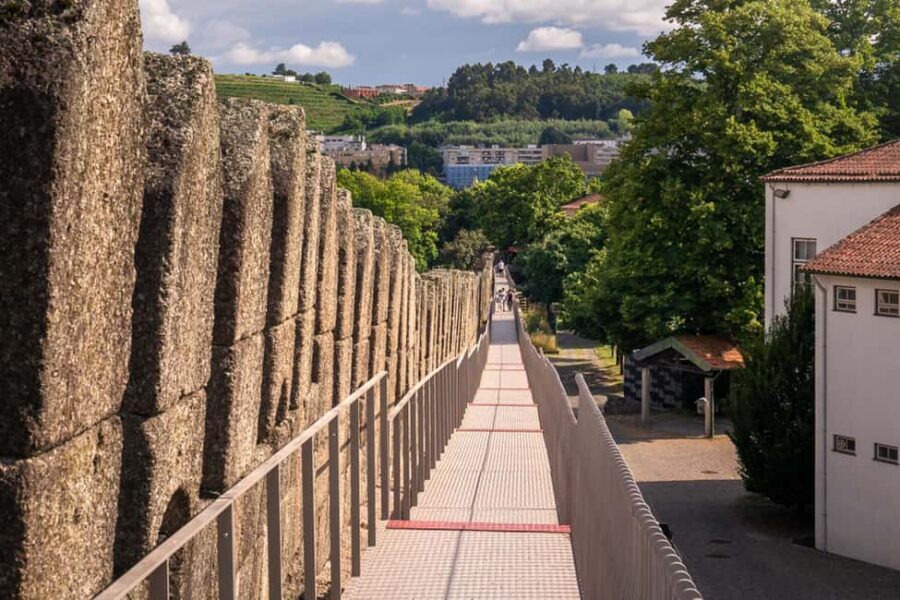
The tour ties together with the Pedestrian Route of the Walls of Guimarães. Walking on the walls gives you a different perspective than looking at the town from street level. You get a sense of scale—how the streets and squares sit below the stone fortifications.
This is also where your route becomes a true loop. You’re not just returning the way you came. You’re moving through a scenic segment that gives the day a satisfying finish.
In terms of comfort, plan for steady walking and uneven patches if you hit older stones. The good news is the overall route is designed to be easy to follow, and the app helps you stay oriented without needing constant map-checking.
Price and Practical Value: $8 for a 3–4 Hour Independent Experience
At about $8 per person, this is priced like you’re buying time and structure, not a luxury guided day. The value comes from how much you get for that money: a planned route, 40+ points of interest, multilingual audio content, offline use, and support if you get stuck.
Also, the tour includes practical help like prices and opening hours for attractions where applicable. That means you can make decisions on the fly—whether something is worth entering or best admired from outside.
One cost note: paid attractions are not included. So if you want to enter every ticketed site along the way, expect extra costs. But the tour still works well even if you treat paid sites as optional add-ons.
If you like independent travel, this price-to-hours ratio is hard to beat. If you strongly prefer a live guide who can answer questions on the spot, you may feel the lack of a person. Still, the app’s auto-play audio and clear route guidance do a lot of the heavy lifting.
Who Should Book This Walkbox Walk—and Who Might Skip It
This works best for you if:
- You like walking at your own pace and stopping when something catches your eye
- You want an offline, multilingual guide for the UNESCO center
- You’re comfortable navigating with your phone and following a route loop
- You have about 3 to 4 hours and want a structured day without a strict timetable
It might not be the best match if:
- You need step-free routes or have mobility concerns. The tour is listed as not suitable for people with mobility impairments.
- You don’t like self-guided experiences or you’re traveling without a charged smartphone.
Also keep in mind how booking works: you book based on the number of smartphones used for the tour experience. That’s an easy detail to miss if you’re splitting costs without thinking about devices.
Should You Book the Guimarães Flexible Walking Tour?
I think you should book this if you want to see the medieval core of Guimarães without turning your day into a schedule chase. The offline Walkbox setup is exactly right for an old town where signal is unreliable and walking is the main event. You get the big sights—castle, Duques de Bragança Palace, Oliveira Square, Toural Square, major church stops—and you also get the smaller, more textured parts like the medieval leather tanks.
Skip it if you’re looking for a live, question-answering guide or if walking mobility is a concern. In those cases, you’ll want a more accessible, staff-led alternative.
If you do book it, bring comfortable shoes, keep your phone charged, and plan to move slowly for at least a few stops. Guimarães rewards patience, and this route is built for that.
FAQ
Where does the tour start and end?
The tour starts and ends at Campo de São Mamede car park, behind the Castle of Guimarães.
How long is the walking route?
It takes about 3 to 4 hours, depending on your pace and how long you stop at points of interest.
How far is the route?
The route is about 3.5 km.
Does the Walkbox tour work offline?
Yes. The Walkbox app works offline and provides audio guides that play automatically.
Is there a live guide with you?
No. There is no live tour guide. Guidance comes through the Walkbox app, with remote support from the tour’s curator if you need help.
Is it suitable for people with mobility impairments?
No. The tour is listed as not suitable for people with mobility impairments.