REVIEW · MATOSINHOS
Porto: Surf Lesson with the First Surf School in Porto!
Book on GetYourGuide →Operated by SurfingLife Club, 30 years of experience · Bookable on GetYourGuide
Surfing gets easier with the right teacher.
In Matosinhos, this lesson is built for real progress: small-group coaching (max 8) and personal feedback from instructors with 30 years of experience. I love that the guidance is practical and step-by-step, not vague. One drawback to plan for: it’s a 1.5-hour session, so you’ll do plenty of setup and practice on sand, not just nonstop time catching waves.
The lesson starts at the famous Anemone Roundabout right by the Matosinhos beach sand. In other words, you’re close to the water fast. You’ll get a level-based warm-up, surf safety instructions, then hands-on work with paddling and standing before you test it out in the sea.
In This Review
- Key things to know before you go
- Anemone Roundabout to Matosinhos Sand: Meeting Point Made Simple
- 1.5 Hours of Surf Basics: What Happens Before You Go Out
- Level-Based Coaching in the Water: Getting Feedback That Actually Helps
- Equipment, Insurance, and Safety Setup: What’s Covered
- Why This Porto Surf Lesson Feels Like Good Value (Not Just a “Tour”)
- Who Should Book This Surf Lesson in Matosinhos?
- What to Bring (and What Will Make Your Lesson Easier)
- The Practical Flow: How to Get the Most Out of Your Session
- Should You Book This Porto Surf Lesson?
- FAQ
- How long is the surf lesson?
- How much does it cost?
- What’s included in the price?
- Where do I meet the instructor?
- What should I bring?
- What group size and language options are available?
Key things to know before you go
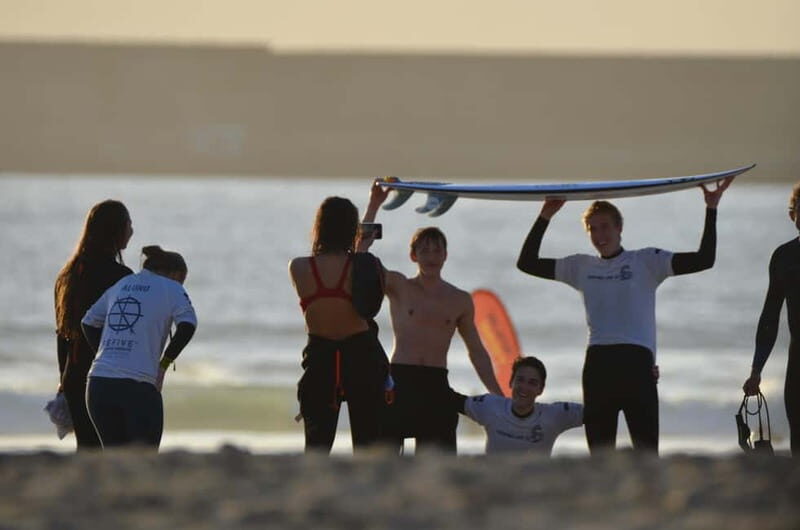
- Max 8 people means you’re not lost in the shuffle
- 30 years of experience shows up in the way they teach fundamentals
- Sand drills first so paddling and standing don’t feel like random chaos
- Personal feedback from your instructor throughout the session
- Multi-language support (English, Polish, Spanish, French, Portuguese)
Anemone Roundabout to Matosinhos Sand: Meeting Point Made Simple
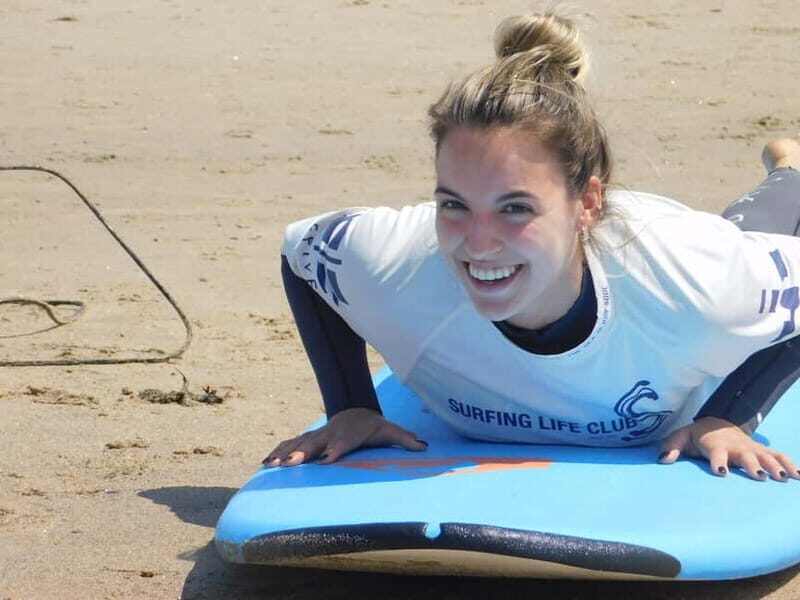
This lesson is easy to find because it starts at the Anemone Roundabout and it’s also by the Matosinhos beach sand. That matters more than you’d think. Surf lessons often waste the first 20 minutes with “where are we meeting?” and extra walking. Here, you’re already at the beach area, so the time you pay for goes toward learning.
I suggest arriving with enough time to settle in before gear goes on. You’ll be in swimwear under your clothes, and you’ll want your towel and sunscreen ready. If the forecast is sunny, sunscreen is not optional—sea air plus wind still means sunburn happens fast.
Also, keep your expectations realistic. This is a beginner-friendly format, and the best learning comes from listening, trying, resetting, and trying again. The meeting point being close to the action helps you do just that.
You can also read our reviews of more tours and experiences in Matosinhos
1.5 Hours of Surf Basics: What Happens Before You Go Out
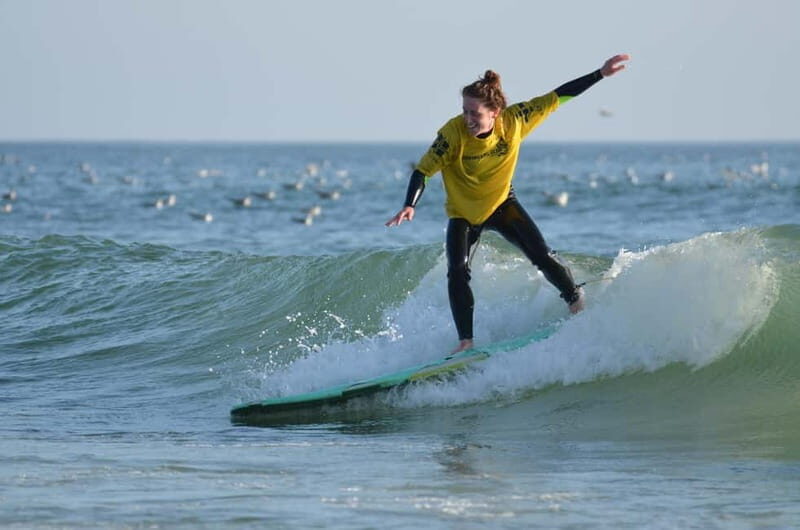
The session runs 1H30MIN, and it follows a clear rhythm. Each time, the instructors start with a short introduction to surfing that’s adapted to your level, then they cover the key safety instructions you need before you head into the water.
Then comes the part many first-timers appreciate: practice happens on land first. You’ll work on fundamentals like paddling and standing on the sand so your body learns the moves before waves get involved. That reduces the panic factor. You spend less time thinking, and more time repeating the right motions.
From there, you test those skills in the water with your instructor right beside you. If you’re a total beginner, this “learn it first, then try it” flow helps you get your bearings fast. If you’re intermediate, it’s still useful because it tightens your basics—usually where people lose balance and momentum.
You can expect your session to be adapted to your needs. That means you’re not stuck with a one-size-fits-all routine.
Level-Based Coaching in the Water: Getting Feedback That Actually Helps
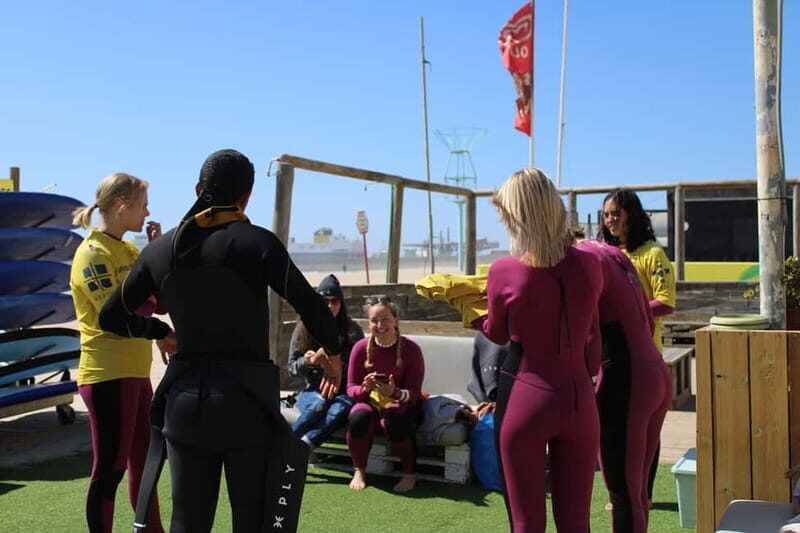
The biggest reason this lesson gets strong marks is how they teach you in the moment. The school keeps the group to a small number (up to 8), so the instructor can watch what you’re doing, not just give one speech and hope for the best.
In feedback people shared, instructors were described as patient and focused on clear tips for improvement. A name that came up is Joao, who’s singled out for making beginners feel comfortable and giving practical coaching. If you tend to freeze when you’re nervous, that kind of calm instruction can make a huge difference.
Here’s what “personal feedback” means in practice: your instructor adjusts the basics—how you sit on the board, when you paddle, how you move your feet when you pop up, and what to focus on between attempts. The goal isn’t perfection. It’s progress you can feel quickly.
One more smart detail: lessons don’t always run with a huge crowd. If your slot is small, the experience can stay intact. For example, in at least one case, the lesson wasn’t canceled when there was only one customer at first, and the group ended up tiny—so the instructor had very high attention and lots of feedback. If you book, you’re likely to get a similar benefit: fewer people means more watching and correcting.
Equipment, Insurance, and Safety Setup: What’s Covered
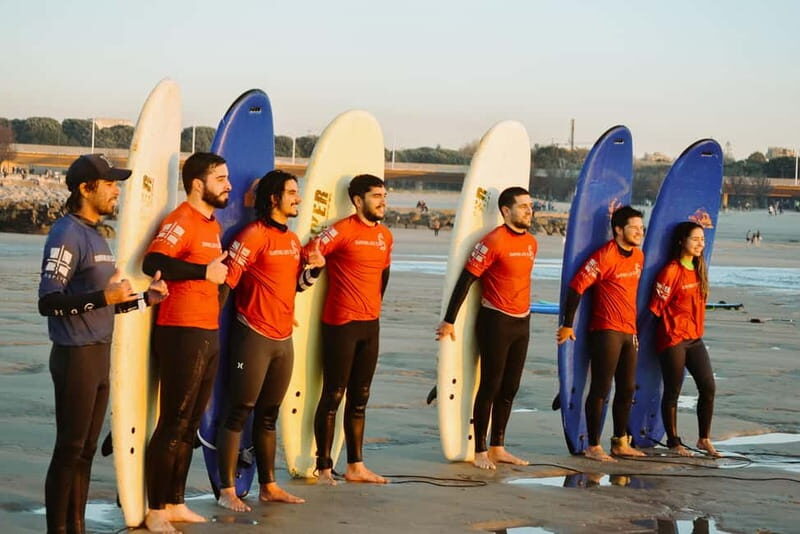
You don’t have to guess about gear. The lesson includes a wetsuit and surfboard plus insurance. That’s real value, because getting the right wetsuit fit and having the proper board can be pricey if you go shopping first.
It also removes one of the biggest first-day stressors. You show up ready to learn, and they handle the surf equipment side.
On top of that, each session begins with safety instructions, and your instructor stays close as you practice paddling, standing, and then try in the water. Surfing is fun, but it’s also a sport with real risks if you rush the basics. Teaching safety early is what keeps the fun part from turning into frustration.
If you’re worried about equipment quality: this is taught by a school with 30 years of experience, and the lesson is designed around using top-quality equipment. You’ll feel it in how smoothly the gear supports your practice.
Why This Porto Surf Lesson Feels Like Good Value (Not Just a “Tour”)
At $34 per person, this is priced like a focused lesson rather than a sightseeing add-on. The best way to judge value here is what’s included.
You get:
- 1H30 surf lesson
- Wetsuit + surfboard
- Insurance
- Personal feedback
- An instructor-led session with safety guidance
So you’re paying mainly for coaching time and instruction quality. When the group is capped at 8, your instructor can give more direct attention. That’s where the value shows up most—because surfing improves faster when someone corrects your technique quickly.
Price matters most when beginners lose time. If you’re stuck guessing, you spend your lesson getting tired and confused. In this format, the sand drills, the safety briefing, and the level-based intro reduce wasted attempts. That’s why even one short session can feel productive.
Also, the school uses multiple languages (English, Polish, Spanish, French, Portuguese). If you’re not fully comfortable with one language, having options helps you understand the instructions clearly—another reason the lesson can be worth it.
With a 4.6 rating from 71 reviews, the overall signal is consistent: people are coming away with a good mix of fun and real guidance, which is exactly what you want when you’re paying for a first surfing experience.

Who Should Book This Surf Lesson in Matosinhos?
This lesson is designed for beginners, intermediates, and advanced surfers. That’s helpful because it means the teaching can match where you are. If you’ve never surfed before, the basics and sand practice do the heavy lifting. If you’ve surfed before, you still benefit from technique coaching—usually the part that improves your wave control and confidence.
It’s also a good pick if you want a lesson that doesn’t treat you like a one-and-done tourist activity. The small-group structure and personal feedback mean you’ll likely get corrections tailored to your attempt.
Two practical considerations:
- It’s not suitable for people over 65. If that affects your group, you’ll need an alternative activity.
- It is listed as wheelchair accessible, so it’s built to be reachable for people who need that support.
In short: book this if you want structured instruction close to the water, and you like learning with correction in real time.
What to Bring (and What Will Make Your Lesson Easier)
You don’t need to pack surf gear, but you do need to show up prepared. Bring:
- Swimwear
- Towel
- Sunscreen
- Water
A towel sounds basic, but it’s not a small thing. After you get out, you’ll want to dry off quickly so you can warm up and keep moving. Water helps you stay comfortable before and after, especially on windy or sunny days.
Pack sunscreen even if it looks cloudy. Sea breeze still exposes you. And if you’re prone to sunburn, consider bringing extra protection like a hat. The lesson includes wetsuit and board, but sun care is on you.
If you’re choosing what to wear, avoid complicated layers. You’ll be changing and moving around. Keep it simple: swimwear underneath, then whatever outer layer you need on the way to the sand.
The Practical Flow: How to Get the Most Out of Your Session
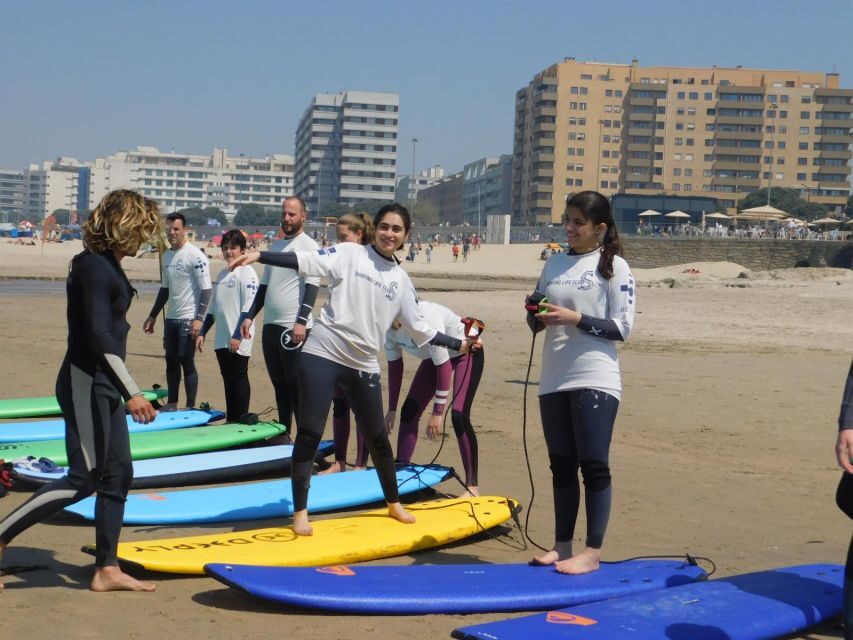
Here’s how to get the best learning payoff from a short 1.5-hour lesson.
First, listen closely during the intro. The safety briefing and the level-based surf explanation set expectations for the whole session. If you understand what they want you to do, your practice attempts become productive faster.
Next, commit to the sand drills. It can feel slower than jumping straight into the water, but this is where you build the muscle memory needed for standing up. If you rush this stage, you often repeat the same mistake in the water.
When you get into the sea, focus on one or two coaching cues at a time. Trying to fix everything at once can turn into overthinking. Since you’re getting personalized feedback, you can use that to pick the next adjustment and apply it right away.
Finally, stay relaxed between attempts. Surfing is repetitive learning. The instructors will keep the session fun and moving, but your progress speeds up if you treat each try as a small experiment.
Should You Book This Porto Surf Lesson?
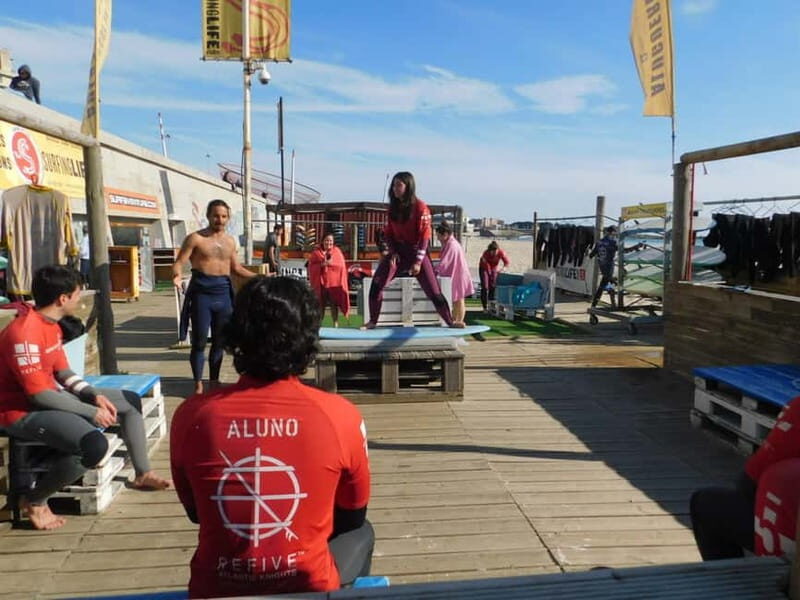
I’d book this if you want your first surf lesson to feel controlled and confidence-building. The combination that makes the biggest difference is the pairing of small group size and personal feedback. You don’t need experience to benefit, and you won’t feel left out.
It’s also a good value at $34 because you’re not just paying for a board and a quick ride. You’re paying for structured fundamentals, safety guidance, and coaching in a short, efficient session.
Skip it only if you fall outside the suitability guidance (it’s not suitable for people over 65) or if you’re expecting a lesson that’s only about catching waves nonstop. This is fundamentals-first. And honestly, that’s the type of lesson that helps you improve instead of just getting wet.
If you’re heading to Porto and want a fun, hands-on activity near the water, this Matosinhos surf lesson is one of the clearest ways to get started with solid technique fast.
FAQ
How long is the surf lesson?
The lesson lasts 1H30MIN. Starting times depend on availability.
How much does it cost?
It costs $34 per person.
What’s included in the price?
The price includes 1H30MIN surf lesson, wetsuit, surfboard, insurance, and personal feedback, plus time for fun.
Where do I meet the instructor?
Meet at the Anemone Roundabout, which is also located by the Matosinhos beach sand. The activity ends back at the meeting point.
What should I bring?
Bring swimwear, a towel, sunscreen, and water.
What group size and language options are available?
The group is limited to max 8 participants. Instructors are listed as available in English, Polish, Spanish, French, and Portuguese. The activity is wheelchair accessible, and it is listed as not suitable for people over 65.