REVIEW · PORTO
Beyond the Barrel: From Decadent to Down-home in the Heart of Porto
Book on Viator →Operated by Culinary Backstreets Walks · Bookable on Viator
Porto tastes better when someone shows you where to start. This walk strings together old-city landmarks and down-to-earth eating, so the history feels practical, not museum-y. You’re moving through viewpoints, churches, and neighborhood squares, with stops built around snacks that add up to a real meal.
I especially love the way the route mixes major Porto icons (hello, São Bento) with local food moments that feel everyday and friendly. And I like that the group stays small, max 7 travelers, which means you can ask questions and get real attention at each stop.
One thing to consider: it’s about 5.5 hours on foot with a moderate pace, so bring comfortable walking shoes and expect some stairs and uneven sidewalks.
In This Review
- Key highlights to know before you go
- A Porto food walk that actually teaches you what you’re eating
- Where you begin: the walk starts with views, not confusion
- Praca Gomes Teixeira: churches, the Clérigos tower, and your first coffee-and-pastry hit
- Miradouro da Vitória: viewpoints plus a savory pastry break
- São Bento Railway Station: migration history, fresh fruit, then a local taverna
- The Porto sandwich moment: where friendliness and a real specialty take over
- Praça dos Poveiros: cheese, wine, and small plates in a square
- Fontainhas viewpoint and the ending dessert at Muralha Fernandina
- Food value: how the 150 dollars turns into a real meal
- Guides make or break it: Marta, Carine, and Bruno set the tone
- Who should book this tour in Porto
- Should you book Beyond the Barrel?
- FAQ
- How long is the Beyond the Barrel tour?
- How big is the group?
- Is it offered in English?
- What food and drinks are included?
- What major sights do you pass or visit?
- Where does the tour start and end?
- What fitness level do I need?
- What if the weather is bad or I need to cancel?
Key highlights to know before you go
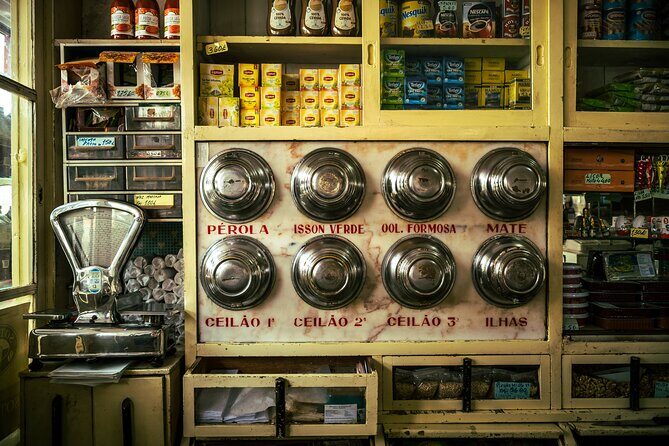
- 7 travelers max means more guide time and fewer awkward bottlenecks at tastings
- Snack-heavy pacing that adds up to lunch, not just a couple of bites
- São Bento Station + a migration history lesson keeps the day grounded in real context
- Vinho verde and local specialties show up alongside pastries, cheese, and charcuterie
- Multiple viewpoint stops so you can pair food with the city’s geography
- Porto’s “barrel-to-down-home” mood: fancy sights, simple comfort food
A Porto food walk that actually teaches you what you’re eating
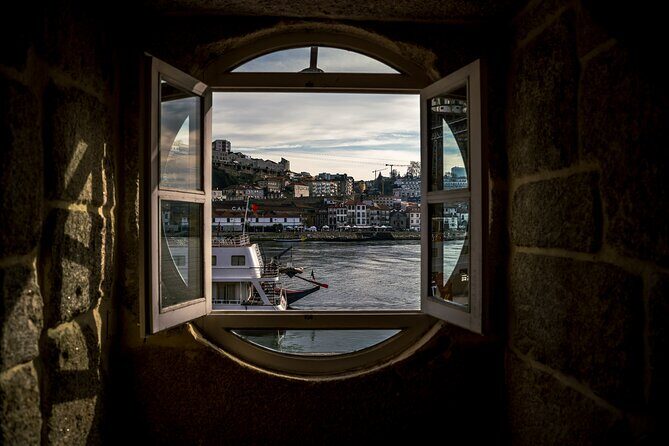
This experience works because it treats food like culture, not a side quest. You’re not just handed things to taste. You’re walked past landmarks like São Bento Train Station and surrounded by the same streets locals navigate every day. Then the guide ties it together with stories you can remember because you’re eating at the same time.
The best part for me is the balance: yes, there are impressive sights. But the day keeps landing back on practical, satisfying food—coffee and pastries early, then savory bites and fruit, then wine and charcuterie, then cheese and wine, and finally dessert. By the end, you don’t feel like you merely sampled. You feel like you ate your way through Porto’s personality.
And if you’re the kind of traveler who likes to know why something matters, this tour gives you just enough background to make the tastings click: church façades and viewpoints connect to the geography, and a short lesson at São Bento connects place to people.
You can also read our reviews of more tours and experiences in Porto.

Where you begin: the walk starts with views, not confusion
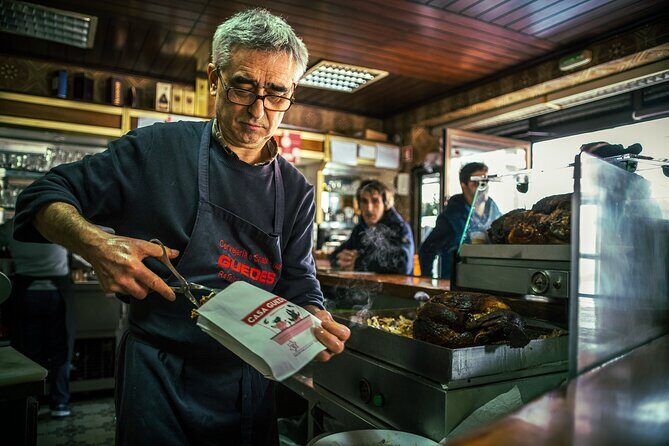
The meeting point is Jardins do Palácio de Cristal on Rua de D Manuel II. That’s a smart start because it sets you up with the sense that you’re in Porto’s elevated, layered city. You’re also near public transportation, so you’re not stuck planning a complicated arrival.
The walk ends near Porto São Bento, at Praça de Almeida Garrett. That matters if you have plans afterward—your legs will be tired, but you’re not forced into an awkward “now what?” commute across town.
The tour duration is about 5 hours 30 minutes, so you should treat it like a half-day commitment. Plan other sightseeing for later, when your appetite can recover a bit.
Praca Gomes Teixeira: churches, the Clérigos tower, and your first coffee-and-pastry hit
Your first stop is Praca Gomes Teixeira, a monumental square where you’re surrounded by church landmarks, including Igreja do Carmo and Igreja das Carmelitas. This is one of those places where Porto’s identity shows up fast: old stone, big architecture, and the feeling that the city has been shaping itself for a long time.
You also get a look at the Clérigos tower, described as a baroque masterpiece. Even if you don’t know baroque details, you’ll feel the confidence of the building. It’s the kind of sight that makes you pause, which is great early in the day when you still have energy.
Then the food starts right away: you enjoy a delicious pastry with coffee. This works for two reasons. First, it gets you into the day with a familiar comfort item. Second, it primes you for the rest of the tastings so you’re not waiting until late afternoon to feel fed.
A small drawback: because this is a square and a landmark area, there can be foot traffic around you. If you’re easily distracted by noise, keep your focus on your guide and the food timing.
Miradouro da Vitória: viewpoints plus a savory pastry break
Next comes Miradouro da Vitória, one of Porto’s viewpoints. The big value here is geography. Porto doesn’t sit flat; it climbs and folds. Seeing it from a viewpoint helps you understand why the city feels dramatic even when you’re just walking between streets.
And yes, there’s food. You taste a traditional savory pastry, served around the viewpoint time. This pairing is practical: you get a moment to look around while your stomach gets a real break, not just a quick snack.
Plan for this: if the viewpoint is crowded or weather is changeable, you’ll want to listen closely for your guide’s timing so you don’t miss the food portion.
São Bento Railway Station: migration history, fresh fruit, then a local taverna
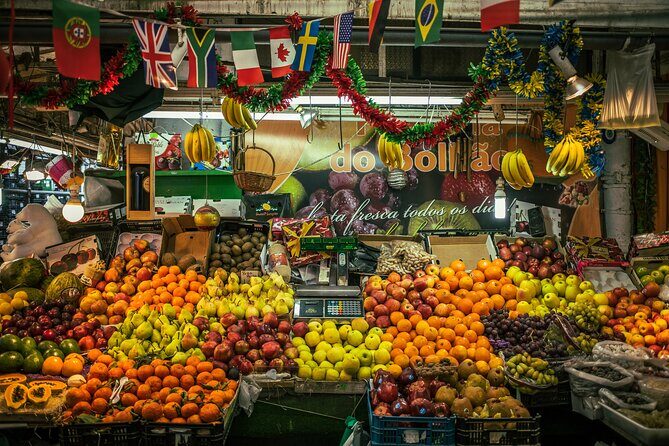
Your stop at São Bento Railway Station is quick, but it has impact. You pop in for a lesson on migration history, before moving on to fresh fruit. Even with the short timing, it adds meaning to a place you might otherwise treat like a photo stop.
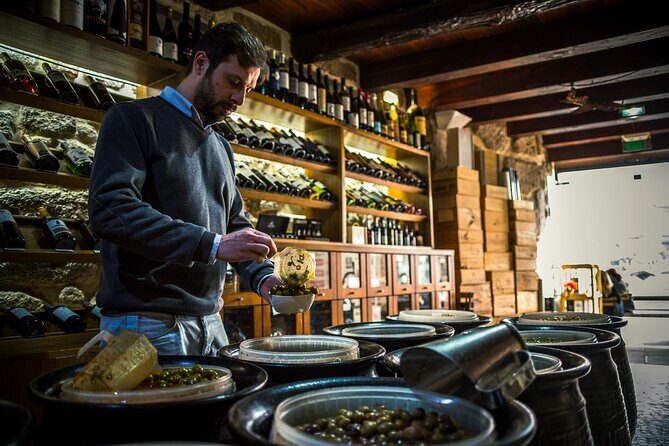
Then you shift into the heart of the eating: nearby you head to a taverna with an avid local following for a sip of vinho verde, plus charcuterie and a salt cod speciality.
This is a highlight segment for food. Vinho verde is a classic fit for a walking tour because it’s easy to drink while you’re still moving through the day. The menu choices also make sense as progression: fruit lightens things up after the station lesson, and then the wine and salty, cured flavors land as a stronger mid-tour meal.
What I like about this ordering is that you’re not overwhelmed early. The day builds. You start with coffee and pastry, you get savory pastry and views, you learn something at São Bento, you refresh with fruit, and then you get the wine-and-charcuterie wave.
One consideration: because you’re tasting multiple items, pace matters. If you tend to eat fast, slow down just a bit so you can enjoy each stop instead of racing to the next one.


The Porto sandwich moment: where friendliness and a real specialty take over
After the taverna, you reach a part of the day that’s very “walkers’ Porto.” Nearby you enjoy one of the best sandwiches in the city, described as a Porto speciality, with the friendliest staff you can find.
This stop is more important than it first seems. A good sandwich is the difference between a food tour that feels like bites and one that feels like a full experience. Here, the guide’s placement matters: you’ve already had savory items and wine, so the sandwich lands as satisfying comfort, not just another plate to sample.
If you’re picky about what you like, this is a good moment to check in with the guide about what’s in the sandwich before you start. The tour format is small, so you can get a clearer answer than you might at a larger group feeding station.
Praça dos Poveiros: cheese, wine, and small plates in a square
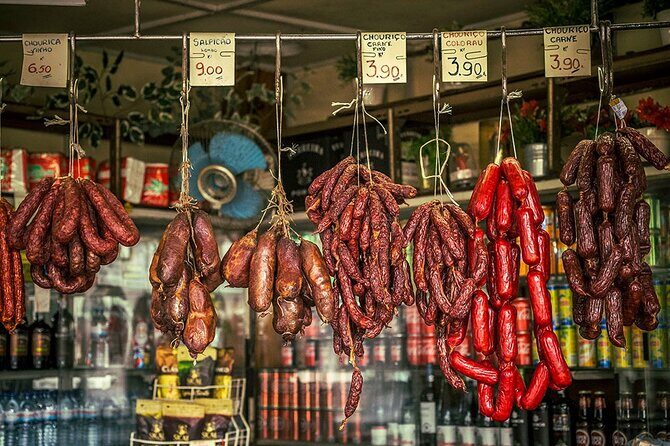
Then you move to Praça dos Poveiros, a square lined up with food energy. The tasting here is cheese, wine, and small plates for about an hour.
This is the “hang around a bit” stop. It’s not just a quick sample. It’s a chance to slow down, sit with your group (max 7 makes that easier), and compare tastes with what you’ve already had earlier in the walk.
I also like this stop because it grounds the day in a specific food style: cheese and wine in a square gives you that sense of Porto eating as a social habit, not a checklist of Portuguese words and flavors.
If you’re watching portion size, small plates are a smart approach. You get variety without one single item dominating the whole stop.
Fontainhas viewpoint and the ending dessert at Muralha Fernandina
To close, you’re sent to a Fontainhas viewpoint. This is a reflection moment after the food. You look out over the city again, knowing you just tasted your way through it. That “food to view” rhythm is one of the reasons this walk sticks.
Then you finish near Muralha Fernandina, where you enjoy dessert in a special bakery for about 30 minutes. Ending with dessert makes sense here because it gives you one last Porto comfort item before you head out near São Bento.
A practical tip: since you’ll be full, keep room for dessert anyway. The tour is built so sweets are a fitting final note, not an optional extra you didn’t plan for.
Food value: how the 150 dollars turns into a real meal
At $150 per person, this tour is not a bargain snack crawl. It’s priced like a guided food experience with multiple tasting moments, plus wine and several distinct stops. The value comes from two things:
- You eat enough to replace lunch. The day includes coffee and pastry, another savory pastry, fresh fruit, vinho verde with charcuterie and salt cod, a Porto sandwich, cheese and wine with small plates, and dessert.
- You’re paying for context, pacing, and access. You don’t just wander. You’re timed to landmarks and viewpoints, and you get a short lesson at São Bento that connects migration history with place.
If you plan to spend money in Porto anyway—on a proper lunch, coffee, maybe a drink—this often starts looking like a smart bundle. You’re also buying the chance to sit down at a taverna that locals actually use, rather than trying to guess where to go on your own.
The tour is offered in English and uses a mobile ticket, which usually means less hassle than paper tickets. The format is also built for comfort: it’s capped at 7 travelers, and service animals are allowed.
Guides make or break it: Marta, Carine, and Bruno set the tone
The names that show up in standout experiences—Marta, Carine, and Bruno—all point to a consistent vibe. The guides are described as warm, engaging, and strong on both Portuguese history/culture and the Northern versus Southern Portugal contrast. That matters because it turns tastings into understanding.
You’ll feel it in the way the day flows. At each stop, you’re not left staring at food with no direction. You’re given just enough framing to know what you’re eating and why it fits Porto.
Also, small-group size helps the guide do better work. With max 7 people, questions don’t get lost. You can ask about what to try next, or how the traditions connect to the places you’re seeing.
Who should book this tour in Porto
This is a great pick if:
- You want food plus context without turning your day into homework
- You like small-group tours where you’re not fighting for attention
- You want a smart first-day plan that shows Porto through landmarks and taste
It may not be ideal if:
- You hate walking for about 5.5 hours
- You prefer very structured, restaurant-only meals with lots of seating breaks (this is still a walk-and-taste format)
- You’re extremely sensitive to wine or strong flavors; there’s vinho verde, charcuterie, and salt cod involved, so you’ll need to plan accordingly
If it’s your first time in Porto, this tour is an efficient way to get your bearings. It’s also a nice choice if you’ve already seen the big sights and now you want the city’s food logic.
Should you book Beyond the Barrel?
I’d book it if you want Porto the way locals experience it: landmarks in motion, food that adds up, and a guide who connects the dots. The small group and the snack-heavy structure make the price feel justified, because you’re getting multiple distinct tastings plus wine, not just a few samples.
If you’re planning a tight itinerary, give yourself a little buffer before and after. You’ll finish near São Bento, but you’ll also likely be full and a bit slow-moving.
For most travelers, this is one of the easiest “yes” decisions for Porto: a friendly, well-paced walk that turns eating into understanding.
FAQ
How long is the Beyond the Barrel tour?
It lasts about 5 hours 30 minutes.
How big is the group?
The tour has a maximum of 7 travelers, so it stays small.
Is it offered in English?
Yes, the tour is offered in English.
What food and drinks are included?
You can expect pastries with coffee, a traditional savory pastry, fresh fruit, vinho verde, charcuterie, a salt cod speciality, a Porto sandwich, cheese with wine and small plates, and dessert.
What major sights do you pass or visit?
You’ll go past or into São Bento Railway Station, and you’ll spend time around Praca Gomes Teixeira with churches including Igreja do Carmo and Igreja das Carmelitas and views connected to the Clérigos tower. You’ll also have viewpoint time at Miradouro da Vitória and Fontainhas Viewpoint, plus an area near Muralha Fernandina.
Where does the tour start and end?
It starts at Jardins do Palácio de Cristal (R. de D Manuel II, 4050-346 Porto) and ends near Porto São Bento at Praça de Almeida Garrett (4000-069 Porto).
What fitness level do I need?
The tour is for travelers with a moderate physical fitness level.
What if the weather is bad or I need to cancel?
The experience requires good weather. If it’s canceled due to poor weather, you’ll be offered a different date or a full refund. There’s also free cancellation up to 24 hours in advance for a full refund, and changes made within 24 hours aren’t accepted.