REVIEW · 1-DAY TOURS
Best of Braga and Guimaraes Day Trip from Porto
Book on Viator →Operated by Living Tours · Bookable on Viator
Portugal has two big story cities.
This Braga and Guimarães day trip is interesting because you don’t just hop between highlights, you get the why behind them on the drive from Porto into Minho. I especially like the air-conditioned minibus comfort plus the fact that your guide connects Portuguese culture to what you’re seeing, from the first stop to the UNESCO streets.
I also love the mix of famous and slightly offbeat stops: Bom Jesus for the architecture and engineering, Braga Cathedral for the country’s early roots, then Guimarães for the medieval mood and its birth-nation narrative. Guides like Castro and Christian are repeatedly praised for making the history clear without turning it into a lecture.
One possible drawback: it’s a long day with limited free time, and lunch isn’t included, so you’ll want to plan where you’ll eat once you get to Braga and Guimarães.
In This Review
- Key highlights to know before you go
- From Porto at 7:50 AM: A Smooth Start to Minho
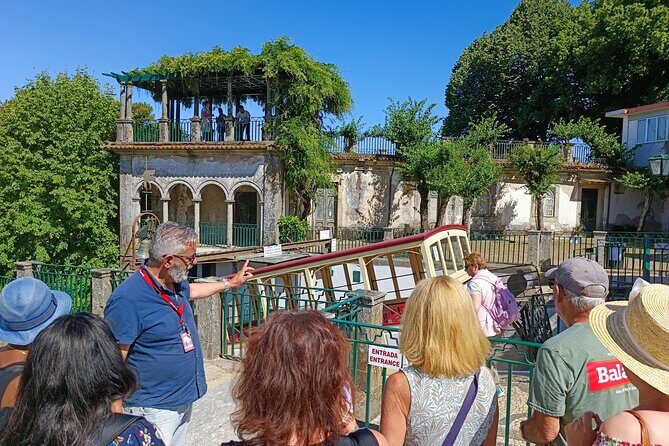
- Bom Jesus Funicular: More Than a Religious Stop
- Braga Cathedral and the Chapel of Kings: Early Roots in Stone
- Braga Free Time: 60 Minutes to Eat, Shop, and Reset
- Guimarães Castle: Birthplace Narratives With Real Access Limits
- Igreja de São Miguel do Castelo: A Small Church With Big Gravity
- Centro Histórico (UNESCO): Medieval Streets You Can Actually Enjoy
- Pacing That Works: Walking, Seats, and Real Free Time
- Price Value: Why $71.35 Can Be a Smart Spend
- Weather Reality in Northern Portugal
- Who This Trip Is For (and Who Should Rethink It)
- Should You Book This Braga and Guimarães Day Trip?
- FAQ
- FAQ
- What time does the tour start?
- Where do I meet the guide?
- How long is the day trip?
- What’s the price per person?
- Is transportation included?
- What admission tickets are included?
- Is lunch included?
- Is there a walking tour?
- Is the tour only in English?
- How big is the group?
- Can I cancel for a full refund?
Key highlights to know before you go
- Bom Jesus’s water-powered 1882 funicular and an unforgettable view from the bottom of the staircase
- Braga Cathedral’s early Portuguese roots, including royal burials in the Chapel of Kings
- Guimarães Castle access limits, so set expectations for what you can walk on
- UNESCO Centro Histórico walking time with restored medieval street character
- Small group size (max 27) and an AC vehicle that keeps the day comfortable
From Porto at 7:50 AM: A Smooth Start to Minho
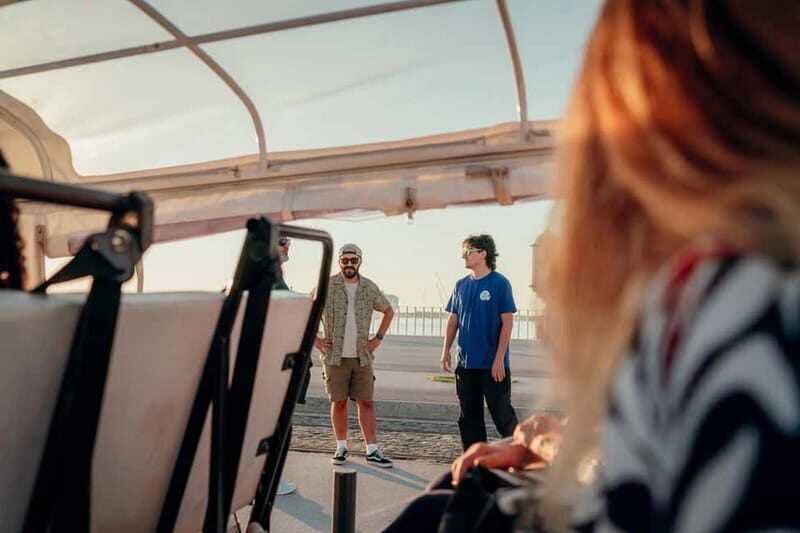
You meet in Porto at Calçada de Vandoma near the start of the day’s action, with departure at 7:50 AM. It’s set up as a full day (about 9 hours, traffic and schedules can shift it), and you’ll come back to Porto at the end—often in the late afternoon, leaving room to still enjoy your evening.
The ride matters. This trip uses a comfortable, air-conditioned minibus, which is a big deal when you’re spending hours hopping between hills, stairs, and old stone. Plus, the day is structured so you’re not constantly marching: you get guided walking time, plus proper moments to sit, listen, and then explore on your own.
Group size is kept to 27 max, which helps with logistics and helps your guide manage questions—something you’ll appreciate at stops like the castle, where people tend to want context.
Bom Jesus Funicular: More Than a Religious Stop
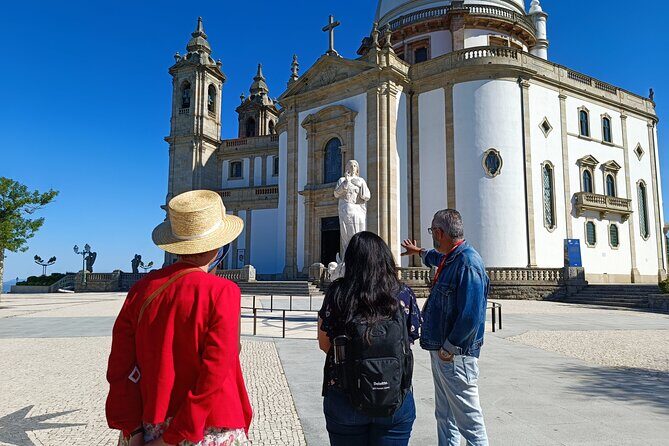
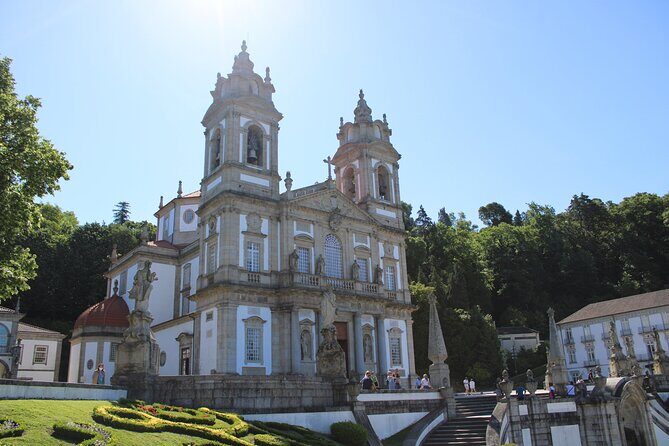
Bom Jesus Sanctuary is famous for faith, sure, but what makes it a standout is the combination of architecture and engineering. The sanctuary’s famous staircase is also the reason a vertical tram exists in this area—an eye-opening slice of 19th-century design.
Here’s what to watch for when you’re there:
- The sanctuary uses a water-powered system to move the 300-meter ramp in about 3 minutes.
- The overall look is credited to Carlos Amarante, whose design is described as Italian-inspired neo-classical and meant to blend with northern Portugal.
- The staircase includes 17 landings, each decorated with symbolic fountains and Baroque-style statues tied to themes like the Stations of the Cross and the virtues.
- The design gets layered at the top with biblical figures, and the church sits within a white outline you’ll see as you look up the stairway.
Practical tip: if you can, take in the view from the bottom of the staircase before heading up or down. The perspective makes the whole setup click, and it’s the sort of moment that doesn’t feel rushed.
Braga Cathedral and the Chapel of Kings: Early Roots in Stone
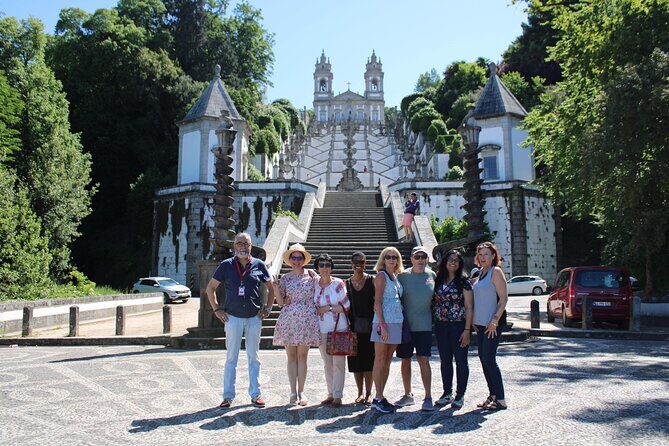
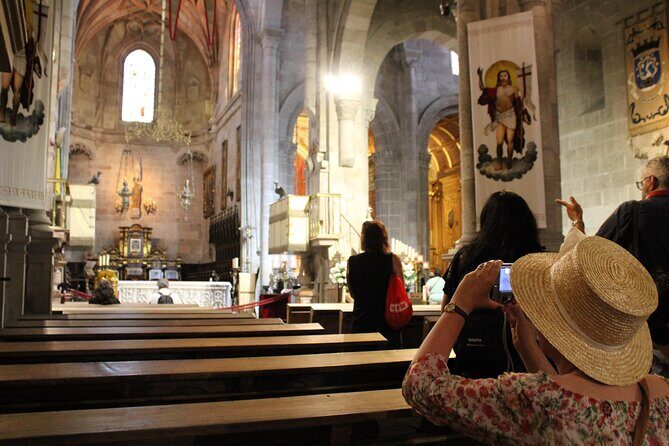
Braga’s cathedral stop is where the day starts to feel deeply “Portugal-specific.” This is not just another ornate building—it’s described as the first Portuguese cathedral, built several decades before the country was formally founded.
The timeline is part of why it lands so well on a day trip:
- Construction began at the end of the 11th century.
- It was consecrated on August 28, 1089, dedicated to the Virgin Mary by Bishop Pedro.
- It’s often compared in power to Santiago de Compostela, but here you’re seeing why Braga mattered early.
Then there’s the royal connection. You can also see that D. Henrique and D. Teresa, the parents of Portugal’s first king, are buried in the Chapel of Kings. Even if you’re not a hardcore church-history person, that detail gives the cathedral weight fast.
Time-wise, it’s a focused stop (about 30 minutes with admission included). That’s enough for key sights and a guided explanation without turning the day into a museum marathon.
Braga Free Time: 60 Minutes to Eat, Shop, and Reset
After the cathedral, you get a break—about 1 hour to roam Braga at your own pace. This is a good chunk of time to do three very practical things:
- Grab a quick bite or coffee (lunch isn’t included, so this is where you can start planning for later).
- Walk the streets you didn’t see yet, especially if you enjoy small shops and local rhythm over major monuments.
- Use the quiet minutes to regroup before Guimarães, which is more castle-and-old-town focused.
Braga isn’t a theme park, so wandering works. If you’re into architecture, look for details in doorways and stonework. If you’re more into people-watching, this hour is plenty to feel the city’s pace without needing a long plan.
Guimarães Castle: Birthplace Narratives With Real Access Limits
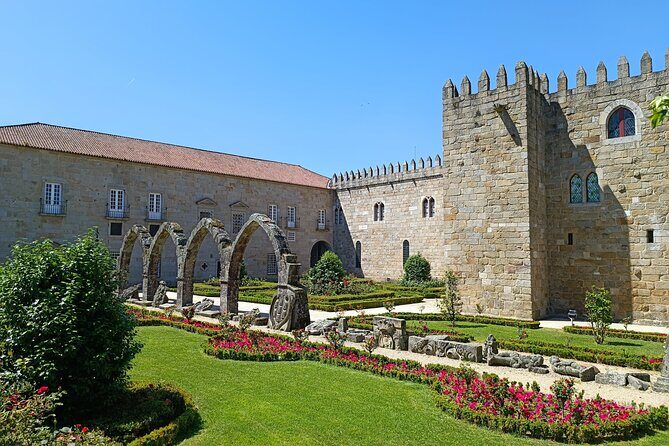
Guimarães is often called the birthplace of Portugal because Afonso Henriques—the first king of Portugal—was born here. This trip gives you that context, then shows you the defensive structure that helped shape the story.
The castle visit is about 30 minutes, and you’ll hear the backstory of the hill where the future nation took shape:
- Around 968, Mumadona, countess of Galicia, ordered a castle be built for refuge against attacks linked to Vikings and raids from Muslim territories.
- Later, after taking control from his father-in-law Alfonso VI of León, Count Henry ordered a larger, more solid construction—leading to what you can still see today.
- The castle is described as dominated by a square keep between four towers, one at each corner.
Then there’s a tradition element: it’s very likely the structure near the northern wall was connected to Count Henry and may also link to Afonso Henriques’ birth. Even if you treat that part as legend, it helps explain why the site feels like more than ruins.
Important expectation-setter: access to the castle and even the walls is limited, and walking on the walls is now prohibited. So if you picture a full ring-walk with big views, adjust your mental image. You’ll still get the main character of the place and the story, just not the full perimeter experience.
Igreja de São Miguel do Castelo: A Small Church With Big Gravity
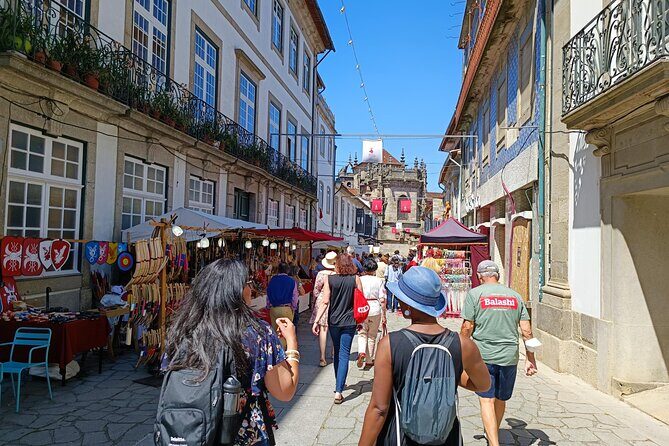
Right after the castle, you stop at Igreja de São Miguel do Castelo, a small church with serious historical weight. The church is said to be from the 13th century, but tradition points to an earlier 12th-century founding tied to Count Dom Henrique baptising his son Dom Afonso Henriques.
What you’re seeing here is described as:
- Romanesque-style, with reduced dimensions and simple decoration.
- A major physical clue underfoot: buried warriors from the founding period lie beneath the floor.
This is one of those stops that can feel short on a schedule (about 10 minutes), but it often sticks because it’s quieter and more intimate than the big sights. It also pairs nicely with the castle, because you’re seeing both the defensive world and the sacred world of the same founding era.
Centro Histórico (UNESCO): Medieval Streets You Can Actually Enjoy
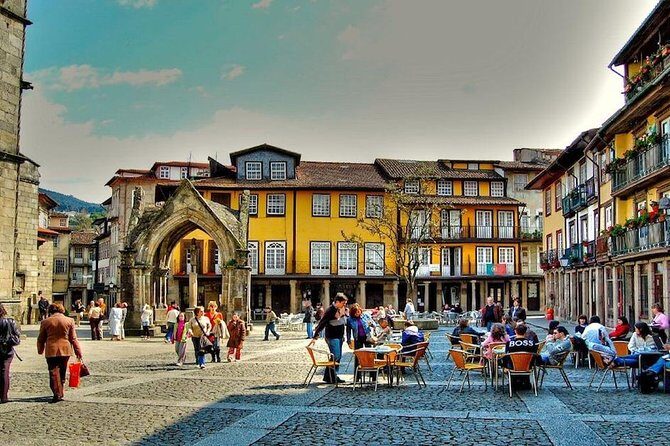
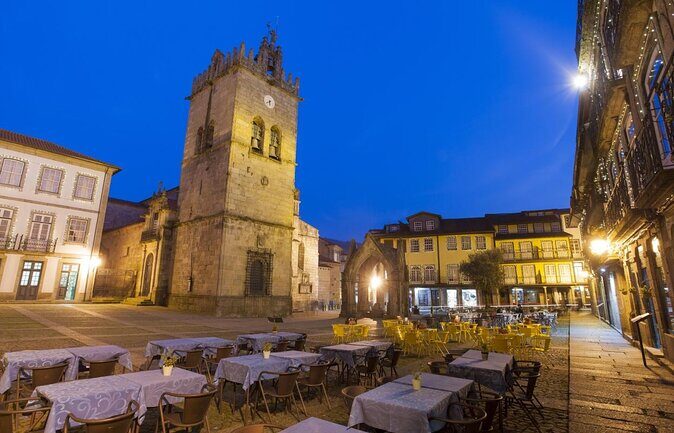
The last major guided chunk in Guimarães is the historic centre—the part inside the old city walls. This area is tied to the formation and identity of Portugal and was classified as a World Heritage site for the originality and authenticity of its restoration.
In practical terms, this is where you get to slow down and let the town do its thing. The walking time is about 30 minutes, and the restored details help you picture medieval life without needing special effort:
- Iron verandas, granite balconies, and porticos
- Narrow streets connected by arches
- Paving stones smoothed by time
- Towers and cloisters
If you want a mental movie, look at houses that show how nobility structures evolved over time. The tour context helps you notice what might otherwise look like just old buildings.
A tiny caution: because you have limited time in each city, it helps to decide in advance whether you want shopping, photos, or just wandering. You won’t have hours here, so choosing your “mission” makes the UNESCO section feel much more satisfying.
Pacing That Works: Walking, Seats, and Real Free Time
This day trip is built around balance. You’ll have guided segments at each major stop, then breaks to breathe, look, and move at your own pace.
The structure is what makes the difference:
- Short, focused cathedral and sanctuary visits where you absorb key facts fast.
- A real sightseeing break in Braga (about an hour).
- A Guimarães route that mixes castle, a small church, and then the old-town walk.
Many people find this kind of pacing ideal when they don’t want to plan routes, buy multiple tickets, or figure out transit on a tight schedule. If you’re the type who always wants more time at the last stop, know this trip ends while you’re still curious—rather than dragging on until you feel museum-sighted out.
Price Value: Why $71.35 Can Be a Smart Spend
At $71.35 per person, the value comes from what’s already paid for and how much guide-led time you’re getting.
Included items that matter:
- Air-conditioned transportation
- A professional guide
- Admission to Braga Cathedral
- Admission to Guimarães Castle
- Entrance to Bom Jesus Sanctuary
- A walking tour in Guimarães (UNESCO area)
- A Porto city walking tour available starting the day after your trip (time slots are offered at 9:30 AM and 4:30 PM, departing from Living Tours Agency on Rua Mouzinho da Silveira 352)
When you add it up, you’re not just paying for transport. You’re paying for time with a guide, entry fees, and a second Porto experience to extend the trip’s learning value.
What’s not included is also clear: lunch is on you. That’s normal for this style of tour, but it’s one more reason to plan where you’ll eat during Braga’s free hour or in Guimarães.
Weather Reality in Northern Portugal
Northern Portugal weather can be unpredictable, and the schedule still runs. If rain happens, the good news is that your day includes indoor-capable stops like cathedrals and churches, plus the ability to keep moving between sites without losing the whole plan.
Still, come prepared. A light rain layer helps a lot, especially around Bom Jesus, where you’re facing stairs and open-air views. Comfortable shoes matter more than you think when you’re mixing stone steps and old-town paving.
Who This Trip Is For (and Who Should Rethink It)
This experience fits best if you:
- Want Portugal history explained in context, not just dates on plaques.
- Prefer a guided day that hits Braga and Guimarães without you needing to stitch together tickets and transit.
- Like having free time to wander, but still want structure to avoid wasting the morning.
You might rethink booking if you:
- Want a very long, slow visit to one city (this is a two-city overview with limited free time).
- Have a strong preference for a single language throughout, since tours can involve a second language.
The upside is that your guide can make the day feel personal in the details. People often call out guides like Philip, Castro, Christian, Pedro, Jose, and Jorge Mendoza for strong pacing, patience, and clear explanations, plus a habit of checking that the group is doing okay.
Should You Book This Braga and Guimarães Day Trip?
If you want a guided day that meaningfully connects monuments to Portuguese identity, I’d book it. The combination of Bom Jesus’s engineering, Braga Cathedral’s early national roots, and Guimarães’s UNESCO old streets is a rare three-part sweep that stays interesting from morning to late afternoon.
Book with confidence if you can accept two practical trade-offs: it is a long day, and you’ll need to handle lunch on your own. If you like structure but still want a chance to wander, this is one of the more efficient ways to get real Minho-and-north-of-Portugal flavor from Porto.
FAQ
FAQ
What time does the tour start?
It starts at 7:50 AM. The tour ends back at the same meeting point.
Where do I meet the guide?
You meet at Calçada de Vandoma, 4000 Porto, Portugal.
How long is the day trip?
The duration is approximately 9 hours, and it can vary due to local traffic and visit schedules.
What’s the price per person?
The price is $71.35 per person.
Is transportation included?
Yes. You travel by a comfortable air-conditioned minibus.
What admission tickets are included?
Admission is included for Braga Cathedral and Guimarães Castle, and you also get entrance to the Bom Jesus Sanctuary.
Is lunch included?
No. Lunch is not included.
Is there a walking tour?
Yes. You get a walking tour in Guimarães in the UNESCO historic centre.
Is the tour only in English?
It’s offered in English, and a second language may be used. Tours are usually in one language, but bilingual delivery can happen.
How big is the group?
The tour has a maximum capacity of 27 travelers.
Can I cancel for a full refund?
Yes. You can cancel for a full refund if you cancel at least 24 hours before the experience starts.