REVIEW · FULL-DAY
Porto: Full-Day Private Tuk Tuk Tour
Book on GetYourGuide →Operated by Portuk Porto · Bookable on GetYourGuide
Porto by tuk tuk feels like cheating—in the best way. This 8-hour private ride stitches together medieval lanes, big viewpoints, and food stops without draining your legs. I especially like the guide-led storytelling that makes the stops make sense, and I also like how the tuk tuk saves time between neighborhoods. The main thing to consider is that tuk tuk comfort can vary day to day, so if it’s rainy or chilly, bring a layer and keep an eye on the vehicle condition.
You meet in the São João area (in front of Café Batalha) and the day flows as a mix of short rides and short walks, with frequent photo moments and a few steps-based viewpoints. In practice, this is a “see a lot, but still breathe” tour—ideal when you want Porto’s big hits plus the calmer corners like gardens and green space.
In This Review
- Key moments that make this tour worth your time
- Why a private tuk tuk works so well in Porto
- From Café Batalha to Porto’s classic shopping-and-market arteries
- Carmo churches, Praça dos Leões, and the Lello Bookstore stop
- Torre dos Clérigos: the 225-step payoff
- Gardens and viewpoints: Cordoaria and Palácio de Cristal stops
- Lunch plus Port wine tasting with regional flavors
- Ribeira, Praça do Infante, and the Douro’s old-city frame
- Following the river to the Atlantic: Arrábida Bridge, Foz, and Matosinhos
- Price and what you’re really paying for at $163 per person
- How to pick the right fit for your day in Porto
- Guides can make or break the experience (plan for that)
- Should you book this Porto full-day private tuk tuk tour?
- FAQ
- Where is the meeting point?
- How long is the tour?
- Is this a private tour?
- What languages are available for the guide?
- What’s included in the price?
- Is lunch included?
- Are monument entrances included?
- Is the tour suitable for wheelchair users?
- What’s the cancellation policy?
Key moments that make this tour worth your time
- Private route pacing with tuk tuk driving plus short walks where it matters
- Clérigos Tower climb for a 360-degree view over Porto and the surrounding hills
- Lello Bookstore stop on the itinerary (you can plan for extra entry costs)
- Port wine tasting with a scenic backdrop later in the day
- Douro-to-Atlantic change of scenery, from river views to Matosinhos and Parque da Cidade
Why a private tuk tuk works so well in Porto
Porto’s charm is also its challenge: steep streets, winding alleys, and neighborhoods that feel close on a map but take longer on foot. A tuk tuk solves that problem fast. You’re not stuck hopping taxis all day, and you’re not walking every single segment either. The result is a day that feels efficient, not rushed.
I also like that this is private, meaning your guide can adjust the day to your pace and interests. When I’m traveling with limited time, I want a plan that reduces decision-making. This tour does that by clustering “must-see” areas—historic center stops, riverfront, and the jump out to Foz and the Atlantic side.
One more practical point: tuk tuks are open-air. In hot weather, it’s great for breeze; in rain, it’s less fun. Bring a light rain layer, and plan on using the short walk segments wisely rather than expecting to stay dry the whole ride.
From Café Batalha to Porto’s classic shopping-and-market arteries
The day starts around the São João National Theatre area, with a guide briefing that sets expectations and keeps the group comfortable. From there, you’ll move into the older, central parts of Porto where the city’s energy is at its highest.
One of the first areas you pass through is Bolhão, including the traditional market vibe and a stretch of commercial life. This is the part of Porto where you see locals shopping, hear everyday Portuguese street life, and understand how the city still functions beyond the postcard view.
Next comes Rua de Santa Catarina, including stops near famous cafés like Café Majestic. Even if you don’t go inside, you’ll get a feel for Porto’s café culture and why these grand old spaces matter to how people experience the city. If you like to understand a place through daily habits, this segment gives you context early.
Carmo churches, Praça dos Leões, and the Lello Bookstore stop
After you’ve gotten your bearings, the itinerary shifts into a more “historic-center walking” mode. The tuk tuk parks and you’ll walk a short section to the Carmo and Carmelite churches area. This is a good moment to slow down and look at details you’d miss from a car: façades, narrow lanes, and the way Porto’s older blocks connect.
Then you cross Praça dos Leões and continue toward Lello Bookstore, built in 1906 and widely known for its beauty. The tour treats Lello as a required stop, not just a quick glance. That’s smart, because it’s the kind of place that rewards a real pause.
Budget note: monument and attraction entrances aren’t included, so if you want to go inside at Lello or pay for any ticketed viewing experience, plan extra. Still, even an exterior-and-story stop gives value, because your guide can connect why Lello fits into Porto’s cultural identity.
Torre dos Clérigos: the 225-step payoff
Climbing the Torre dos Clérigos is one of the most concrete “you did this” moments on the route. The tower is an 18th-century granitic landmark and is tall enough to make the whole city center look like it’s laid out for you.
You’ll climb 225 steps for access to a 360-degree perspective. That number matters because it sets expectations: this isn’t a long hike, but it’s not a casual stroll either. If your legs are fine with a climb, this is the payoff stop where the day’s travel makes sense in one view.
This is also where having a strong guide pays off. Several guides are described as great at mixing stories with practical points, and that matters when you’re looking out over a city you may not yet fully understand. You’ll come away knowing what you’re seeing rather than just staring at rooftops.
Gardens and viewpoints: Cordoaria and Palácio de Cristal stops
Between the iconic monuments, the route makes space for green areas and calmer pockets of Porto. In the Cordoaria garden zone, you’re near the University area and other major institutions, with the advantage that it feels like a breather between busy streets.
Then comes the Palácio de Cristal Gardens—another of those stops that works whether you love botany, photos, or just “sit for five minutes” breaks. These gardens also give you unique sightlines over the Douro River. That shift—from stone streets to garden paths to river views—keeps the day from feeling like a checklist.
Porto can be visually dense. Garden stops help you process what you’ve already seen, and they also make the later riverfront feel more dramatic because you’re already picturing the terrain.
Lunch plus Port wine tasting with regional flavors
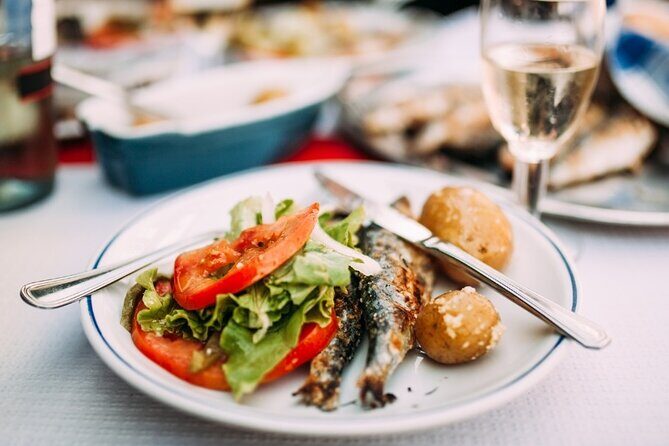
Lunch is a tasting meal of regional products. You can expect a mix that includes cheeses, sausages, or canned fish, with wines from small local producers. That structure matters: you’re not locked into one menu item, and you’re tasting Porto through typical ingredients rather than generic tourist food.
In the best versions of this tour, the lunch is described as authentic, typical, and very delicious, arranged by the guide. In other cases, the lunch can land less perfectly depending on preferences. So go in with the right mindset: this is a regional tasting, not a fine-dining tasting menu with endless custom choices.
After lunch, you also get local Port wine as part of the tour’s tastings. The highlight here is the view that comes with it. Porto’s port culture is more than a label—it’s tied to the river geography and the hills that made grape growing possible. A tasting tied to scenery is the kind of memory that lasts longer than a museum stop.
Ribeira, Praça do Infante, and the Douro’s old-city frame
The next big chunk takes you through the oldest and most iconic center neighborhoods still recognizable in their original character. You’ll pass through Miragaia and Vitória—tight, historic blocks where the city feels layered rather than staged.
Then you reach Praça do Infante, a key square that sets you up for the cluster of major sights nearby: Palácio da Bolsa, the São Francisco church, and the old Ferreira Borges market area. The value of being shown how these connect is that Porto’s center feels like a system, not separate attractions.
After that, you reach Ribeira, the last of the four oldest historic-center neighborhoods you still need to cover on the itinerary. Ribeira is where Porto’s riverfront becomes unmistakable. Even if you’re not buying anything, it’s a strong place to understand why the Douro mattered so much to trade and wealth.
A good guide helps here. The stories don’t just add trivia. They give you a mental map for what you’re seeing—how the riverfront businesses worked, why the city grew the way it did, and why the streets are shaped the way they are.
Following the river to the Atlantic: Arrábida Bridge, Foz, and Matosinhos
After the historic riverfront, the tour keeps moving along the Douro’s right bank, passing through Arrábida bridge. This is a classic “big view” transition point. You’re going from the old city frame toward the open-air feeling of the coast.
Next is the Foz river mouth, where you swap river scenery for Atlantic Ocean air. You’ll cross the main avenue toward Matosinhos, known as a fishing area with beaches. On a clear day, this feels like a different Porto world: wind, sea light, and a sense of everyday coastal life.
If you care about surf culture, this is also where you might spot surfers, since it’s described as a place where you can regularly see them. Even when you’re not surfing, the coastal vibe makes a strong contrast to the historic core.
Finally, Parque da Cidade enters the picture. This is the largest urban park in Portugal, and it rounds out the day with space to breathe. It’s a nice end to the “see everything” feeling, because a park gives you options: walk a little, take photos, or just stop and watch the day move.
Price and what you’re really paying for at $163 per person
At $163 per person for an 8-hour private tour, you’re paying for three things: a guide, transportation (tuk tuk), and a structured route that hits multiple districts without you navigating. The price feels most reasonable when you value time. Porto can be hard to cover efficiently if you’re trying to do everything on your own between steep streets and scattered highlights.
What’s included:
- Transportation
- Guide
- Lunch
- Wine tasting
What’s not included:
- Entrance to monuments
That last line can affect your total budget, because stops like Lello and any tower access may require tickets depending on what you choose to do. It doesn’t mean you can’t enjoy the stops; it means you should plan a little extra money if you want to go inside or pay for specific viewing access.
Also, private tours vary in how “private” they feel. Here, it’s built around a private group, mixing tuk tuk rides and short walks, so you get flexibility without losing structure. If you hate standing in line and waiting for a tour group, a private setup usually helps.
How to pick the right fit for your day in Porto
This tour is a great match if:
- You have one full day and want a lot covered without turning it into a leg workout.
- You want both historic Porto and the coast side of the city.
- You like learning context while you sightsee, not just being dropped at viewpoints.
It may be less ideal if:
- You’re very sensitive to open-air conditions, especially during rain. One unhappy experience highlighted issues with vehicle comfort and gear, so come prepared with layers.
- You use a wheelchair, because it’s not suitable for wheelchair users.
- You want zero walking. The day includes short walks and one notable climb.
Guides can make or break the experience (plan for that)
The reviews include clear praise for guides who drive well and tell stories that make each stop land. Names that come up include Gonçalo, who’s described as an excellent driver, story teller, and a fountain of facts and fun, with the added bonus of patiently waiting while guests explore sites. Another guide mentioned is Bernard, described as pleasant and intelligent. Anna is also highlighted for being amazing and for helping guests see more than they could on their own later.
Here’s my practical takeaway: if you connect with your guide’s style, the whole day clicks. If you don’t, the tour still has strong destinations—but the experience will feel more like transportation between stops.
If you book, look for a day and weather that fit open-air travel, and ask your guide to explain the flow if anything feels unclear. Good guides love helping you get value from every move.
Should you book this Porto full-day private tuk tuk tour?
I’d book this tour if your goal is a high-coverage day that still feels human: historic lanes, major viewpoints like Clérigos, a proper look at Lello Bookstore, a regional lunch, and a day’s worth of changing scenery from the Douro to the Atlantic and Parque da Cidade.
I would hesitate if you’re expecting a fully comfortable sealed vehicle in rain, or if your priority is only monuments with paid entry. Since entrance costs aren’t included, you need to budget for whatever you choose to go into.
If you want Porto with less stress and more story, this is a smart way to spend 8 hours—especially when you have limited time and you want your pictures to make sense later.
FAQ
Where is the meeting point?
You meet in front of Café Batalha.
How long is the tour?
The tour lasts 8 hours.
Is this a private tour?
Yes, it’s a private group tour.
What languages are available for the guide?
The live guide is available in Portuguese, Spanish, and English.
What’s included in the price?
Transportation, guide, lunch, and wine tasting are included.
Is lunch included?
Yes. Lunch is a tasting with regional products.
Are monument entrances included?
No. Entrance to monuments is not included.
Is the tour suitable for wheelchair users?
No, it’s not suitable for wheelchair users.
What’s the cancellation policy?
Free cancellation is available up to 24 hours in advance for a full refund.