REVIEW · PORTO
Porto: Tile Painting and Cocktails in Downtown Porto
Book on GetYourGuide →Operated by Boiler Studio · Bookable on GetYourGuide
Porto makes a great case for slowing down. In this tile painting workshop at Boiler Studio, you mix hands-on art with the story behind Portugal’s famous azulejos, in a calm, social setting with drinks. I love that it’s guided, so you’re not left staring at a blank tile, and I also love the way the history part makes the colors and patterns feel personal. One thing to consider: since you’re painting for a full 2 hours, you’ll want to plan a little buffer if you’re hoping to be perfectly on-schedule right after class.
The workshop is based in downtown Porto, right on Rua Chã 77 in front of the Cathedral area, so you can build it into a day around São Bento Station, the Luis I Bridge, Time Out Market, and of course the historic tiles you’ll spot everywhere once you start looking.
In This Review
- Key things I’d plan for
- Why Porto’s azulejos start to make sense before your paint touches the tile
- Where Boiler Studio fits into a downtown Porto day
- The 2-hour flow: history first, then paint with real guidance
- Painting with a “don’t worry” attitude (and why that matters)
- Picking a design: traditional patterns or your own image
- Cocktails during class: why the drink is more than a perk
- When and how you take your tile home
- Who this workshop is best for (and who might prefer something else)
- Value check: is it worth $41 for 2 hours?
- Practical details that help you go in prepared
- Should you book this Porto tile painting workshop?
- FAQ
- How long is the tile painting and cocktails workshop?
- What’s included in the price?
- Where does the workshop meet?
- Do I need to be good at art?
- Can I take my tile home the same day?
- Is the workshop suitable for children?
Key things I’d plan for
- A hands-on azulejo lesson that explains where the tile tradition comes from, before you paint
- Patient instruction from working artisans (names you may meet include Daniella, Danielle, Emmanuel, and Diogo)
- A relaxed, music-and-cocktail pace that makes it feel like a break, not a chore
- Design options for every skill level, from guided patterns to stencils (and even printed images when you have one)
- Take-home tile with packaging, with drying time sometimes meaning a quick return to the shop
Why Porto’s azulejos start to make sense before your paint touches the tile
Azulejos can look purely decorative from a distance. In this workshop, you learn they’re not random wall art. You get the big timeline and the key ideas first, so when you pick your colors afterward, you understand what you’re actually recreating.
You’ll hear how the tradition dates back to the 13th century after the Arabs’ presence in the region, and how Portuguese culture really took hold of azulejo style between the 16th and 17th centuries. Even the word azulejo has roots in Arabic, tied to the idea of small polished stone. That context matters because it explains why so many tiles have that crisp, patterned look, and why blue shows up so often in early influences.
The workshop also walks you through how tiles connect to seasons and cities, and how the designs have been used over time—not just as decoration, but as a visual language you still see across Porto today. That’s the moment the class turns into more than a fun souvenir: you start noticing architecture differently as you move around downtown.
Where Boiler Studio fits into a downtown Porto day
The meeting point is Boiler Studio, Rua Chã 77, right in a very typical street scene in front of the Cathedral. This is the kind of location that helps you avoid wasted time. You’re not trekking across the city, and you’re close to the landmarks people usually make time for.
If you’re planning a day around the main sights, this workshop works well as:
- a mid-day reset when Porto’s hills and crowds start to wear you down
- an afternoon activity on a rainy day (I’ve seen classes like this work especially well when you want something indoors)
- a cultural add-on after you’ve already spent time at São Bento Station and want a deeper reason behind the tile look
When you arrive, you’re walking into a space that’s also a shop. That small detail is useful: even if you want to keep your hands clean during the workshop, you can still browse local handmade products once you’re done. It makes the whole experience feel more like a neighborhood studio than a formal classroom.
The 2-hour flow: history first, then paint with real guidance
This is a structured 2-hour experience, and the best part is the order. You’ll start with a workshop summary and materials that explain tile history and themes. You’re not just listening to a lecture; you’re getting the ideas that connect to what you’ll paint.
Here’s what the timing usually feels like once the session begins:
1) Short context + tiles 101
You’ll cover the origins, the influences, and why Portuguese azulejos developed the way they did—plus how those patterns show up in modern use.
2) Choose your tile approach
You’ll work from options that include premade designs and stencils. Some people also bring a photo idea, and the studio can help translate that into something you can paint.
3) Painting time, with an instructor nearby
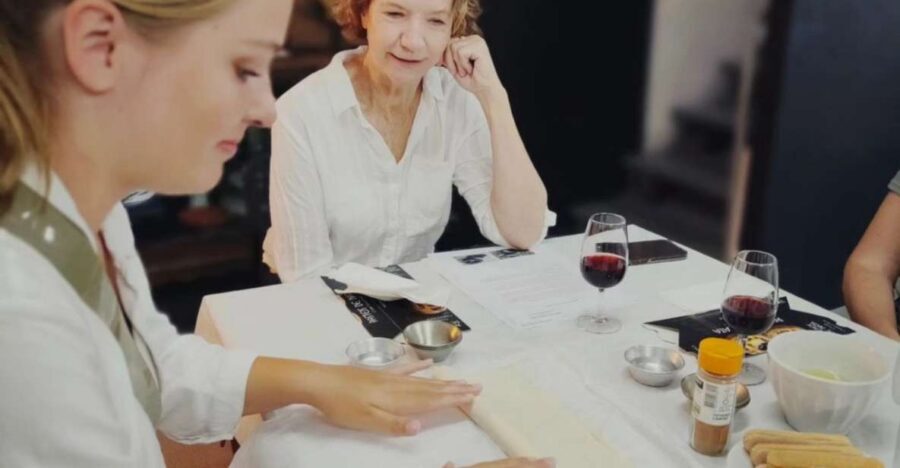
This is where the class earns its high rating. Even if you’re not artistic, you get step-by-step support. The hosts and assistants are there to help you get the lines right, place patterns where they belong, and keep the whole tile from turning into a paint-flecked experiment.
You’ll use a ceramic tile and acrylic paints, plus paper packaging to help you take your finished piece home safely. The class also runs in English and Portuguese, so you’re not forced to guess your way through instructions.
Painting with a “don’t worry” attitude (and why that matters)
The strongest theme here is how easy it feels to succeed. People often assume they need artistic talent for tile painting. You don’t. The workshop is built for comfort and control.
In practice, that means:
- you get guidance while painting, not just a handout at the start
- you can pick a design that matches your confidence level
- you get help if you mess up a small detail (and yes, that happens in real life)
I also like how the studio setup helps you stay calm. The room is described as relaxed and quiet enough that the whole thing feels like a pause button. Calm music is part of that vibe, and it turns a city afternoon into something more like a creative workshop with friends.
If you’re coming with someone who’s less into art, this class still works. The instruction style is patient, and the end result is tangible enough that even skeptical partners tend to enjoy the process.
Picking a design: traditional patterns or your own image
Your tile doesn’t have to be complicated to be good-looking. One of the practical advantages of the studio approach is that you’re offered choices that don’t require drawing skills.
You can typically choose from:
- premade designs and stencils
- a design you generate from something you want to include (for example, a photo idea that the studio can print out for you)
That flexibility matters more than you’d think. If you’re the type who likes structure, stencils make the pattern feel authentic and clean. If you’re more personal-culture focused, bringing an idea you care about can turn the tile into a real memory instead of a generic souvenir.
Cocktails during class: why the drink is more than a perk
Yes, a cocktail is included—but the bigger point is pacing. When the session includes a drink, the class tends to feel lighter. You’re not stuck in a strict craft schedule. You can take your time, ask questions, and settle into the process.
The cocktail options you might run into include a Porto Tonic (and a few people also mention port wine spritzers). Either way, you’re getting something local and refreshing that fits the setting: downtown Porto, a studio with calm music, and a classic Portuguese craft.
If you’re planning this activity as a break from walking and sightseeing, the combination of art plus a drink is exactly what helps it land as enjoyable.
When and how you take your tile home
The experience is designed so you leave with your tile. The practical detail to keep in mind is drying time.
Many people find their finished tile is ready to take away the same day, sometimes even after about an hour. If you paint more slowly—or if you go heavy on detail—you may need to return to pick it up once it’s fully dry. Either way, the studio gives you packaging so you can transport it safely.
My advice: treat this like you’re picking up a fragile souvenir. Don’t toss it into the bottom of a bag with random hard items. Keep it protected in the provided packaging and plan for careful handling on the way back to your hotel.
Who this workshop is best for (and who might prefer something else)
This is a strong fit if you want:
- a Porto activity that’s cultural but not stuffy
- a hands-on souvenir you’ll actually use as a memory
- a class with real support, especially if you’re nervous about art
It’s also a good pick for couples and small groups because the vibe is relaxed and social, and the final product gives everyone something to talk about.
Not the best fit if:
- you’re traveling with kids under 10 (the workshop isn’t suitable for younger children)
- you want a purely observational activity with no hands-on work
- your schedule is so tight that you can’t handle possible drying/pick-up timing
Value check: is it worth $41 for 2 hours?
At $41 per person, the value is mostly in what’s included. You get:
- the ceramic tile
- acrylic paints and all materials for the activity
- paper packaging for taking your tile home
- the history/tile lesson component
- a cocktail
If you break it down, it’s not just a “watch and drink” stop. You’re paying for a guided craft experience with cultural context built in, in a central location. For me, the biggest value indicator is the teaching approach: you can be a beginner and still leave with a tile that looks like it belongs in Porto’s azulejo world.
Practical details that help you go in prepared
Here are the basics you’ll want to know so the experience stays smooth:
- The instructor supports English and Portuguese
- The studio is wheelchair accessible
- The workshop is set up as a relaxed group activity, and it’s designed for adults and kids 10+
- No smoking and no fireworks/explosive substances
Also, since the studio is connected to a local artists shop, plan a little time for browsing either before or after. It’s a nice way to extend the creative theme beyond your tile.
Should you book this Porto tile painting workshop?
I think you should book if you want an afternoon in Porto that feels like a local craft experience rather than another checklist item. This one earns its reputation because the instruction is hands-on, the pace is calm, and the history part helps your final tile mean something. You’ll walk away with a real souvenir that connects directly to what makes Porto visually special.
If you hate messy hands or you’re looking for a fast, purely scenic activity, you might prefer something else. But if you’re open to painting for two hours—even with minimal art confidence—this is one of the most satisfying ways to spend time in downtown Porto.
FAQ
How long is the tile painting and cocktails workshop?
It lasts 2 hours.
What’s included in the price?
You get a workshop summary with texts about tile history, a ceramic tile, acrylic paints, paper packaging, and a cocktail, plus all materials needed for the activity.
Where does the workshop meet?
Meet at Boiler Studio on Rua Chã 77, in downtown Porto near the Cathedral area.
Do I need to be good at art?
No. The class is guided step by step, and you’ll be supported throughout the painting process.
Can I take my tile home the same day?
You take your tile with you, though drying time can affect pickup timing. Some people can take it after painting, while others may need to return after it’s fully dried.
Is the workshop suitable for children?
It’s not suitable for children under 10.